June 24, 2011

life in general: indian government's devious exemption to CBI from RTI Act


Here is an insightful newsreport from Tehelka that spells out the danger posed by the Indian government recently removing the Central Bureau of Investigation from the purview of the Right to Information Act:


Two steps backward, one at a time
Kunal Majumder questions the government’s motives in keeping the CBI out of RTI

The worst fear of Right to Information (RTI) activists has come true. The government has moved the premier, yet controversial, investigative agency the Central Bureau of Investigation (CBI) out of the RTI purview. Their excuse is national security. Ignoring the already present provisions of Section 8 of the RTI Act, that safeguards sensitive information, the government decided to give the CBI a blanket exemption. What is more shocking is the secretive manner in which this change was brought about. In March this year, RTI activist Subhash Chandra Agrawal had filed four RTI petitions with the CBI demanding to know details of the corruption cases involving bureaucrats and ministers. In response, the CBI declined information, calling it voluminous. Agrawal then made his first appeal with the Appellate Authority of the CBI in May. However, on 16 June, the Appellate Authority refused to intervene and informed him that according to a government notification dated 9 June, the CBI had been moved from the purview of the RTI Act. This notification was not even made public before 20 June.

Meanwhile, last month, the Committee of Secretaries under the chair of then Cabinet secretary KM Chandrasekhar recommended the RTI exemption for the CBI, the National Intelligence Agency (NIA) and the NatGrid. When Tehelka raised alarm about the immediacy of the decision, Chandrasekhar assured that there would be many more discussions, including at the level of the Union Cabinet and the Prime Minister. There was no timeframe specified to complete this process. But, then suddenly on 16 June, we read news reports of government’s decision to exempt the CBI from the RTI act. We probably would not have known, if it were not for Agrawal’s rejected application.

Does the CBI, whose credibility is already in question, need such a blanket exemption from the RTI Act? Is the CBI an investigative body or is it an intelligence agency? Why was the public not consulted before such an important decision was made? Has the UPA government opened a Pandora’s Box wherein various state governments would arbitrarily add any agency to the RTI exemption list?
This decision has thrown up a number of questions, which have so far been left unanswered. What we find is vague replies. Attorney General Goolam Vahanvati says that the CBI was taken out of the RTI purview because it is involved in intelligence gathering and safeguarding country’s economic security. As the top lawyer of the country, he chooses to ignore Section 8(1) of the RTI Act, which gives all necessary protection to investigative agencies. If the CBI does not want to reveal certain aspects of their investigation they can do so as guided by the present RTI Act. There are particular provisions made just for intelligence and security agencies.

Is the CBI an intelligence agency or an investigative agency? The CBI is no Research and Analysis Wing or the Intelligence Bureau. The government needs to define and differentiate between investigative, intelligence and security agencies. If any agency that gathers intelligence is an intelligence agency, then every police station is an intelligence agency. The CBI stands on the same footing as any investigation agency, whether it is the Crime Branch or even district police. After all, it is formed under the Delhi Special Police Establishment Act 1946. So, if this exemption is granted to the CBI, it should be granted to all other investigation agencies.

Of course, in any investigating agency certain things have to be kept secret. The act does not ask to reveal every bit of information. It has exemptions within the RTI Act. What the CBI and other such agencies are trying to do now is to escape from being under the RTI Act altogether. The big question for the government to answer is in the last five years of the RTI Act has it hindered the CBI’s operations in any way?

Apart from the CBI, there are 22 other bodies exempted from answering RTI queries. The NIA and the NatGrid have also been added to the Second Schedule. It is time the government laid down very strict norms on what classifies as a security and intelligence agency and is worthy of being covered under the Second Schedule of the act. A wider political consensus and public debate is a must. Even Section 4(1)C of the act states that the government should discuss policy changes with the public. In the context of corruption, this is a big policy change. At the moment, the government merely places the revised schedule in Parliament. It does not require parliamentary approval. The government just gets post-facto approval.

Transparency is the best way to show that an agency is just; otherwise people will continue to call the CBI a puppet in the hands of the ruling party. Every state police department will also start seeking RTI exemption, and what can make matters worse is that the state governments have the authority to decide on these demands. The Uttar Pradesh government has already placed civil aviation department in the list of agencies to be exempted under the act. Others will follow. If the very government that gave us the right to know starts defining what we do or do not have the right to know, isn’t it killing its own law?

Kunal Majumder is a Correspondent with Tehelka.
kunal@tehelka.com

life in general: all need to respect the rights of servants, nannies & other domestic workers

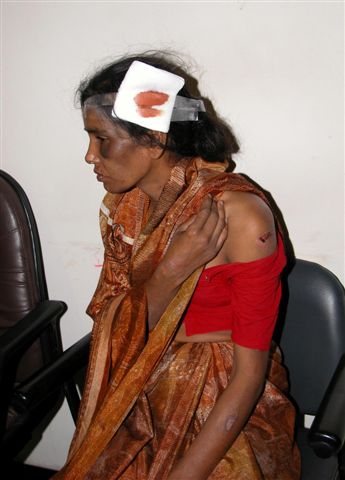
(the picture used in this post below has been taken from http://www.bahrainrights.org/en/node/2490)


Here is some positive development emanating from the efforts of Human Rights Watch:


http://www.hrw.org/en/news/2011/06/23/victory-domestic-workers?tr=y&auid=8559204

 
June 23, 2011

Domestic workers -- nannies, housekeepers, and caregivers -- are some of the most exploited workers in the world. But a new international treaty has been adopted to help protect them, thanks in part to 10 years of Human Rights Watch research and advocacy. The treaty is the first of its kind.

The 50 to 100 million domestic workers worldwide often face a range of abuses, from long working hours with no days off to sexual harassment or violence from their employers. Many work for months without getting paid, or are not paid at all.


This landmark treaty gives these workers the dignity they are due and the same rights other workers have under the law. This includes earning a minimum wage, a weekly day off, and limits to their working hours. It also obliges governments to protect them from violence and to monitor and enforce these provisions.

About 30 percent of domestic workers are girls, some of whom start working between ages 6 and 8, leaving them especially susceptible to abuse. Workers who have migrated from other countries also run a high risk of experiencing violence. The treaty addresses the vulnerabilities of both groups.

When we began investigating abuses of domestic workers throughout the world 10 years ago, almost no one was paying attention to the issue. Our research and advocacy, along with a growing domestic workers' rights movement, helped build widespread recognition of the problem.

We conducted investigations into the abuse of domestic workers in more than 15 countries. While investigating child domestic workers in El Salvador, Guinea, Indonesia, and Morocco, we found that some children start working at age 6 and work up to 16 hours a day, seven days a week. In Indonesia we found that only 1 of 45 child domestic workers interviewed was attending school.

In Malaysia, Singapore, Kuwait, Saudi Arabia, and other Middle Eastern countries, we found that on any given day foreign embassies often doubled as shelters for abused domestic workers filing complaints or trying to return to their homelands.

And in Lebanon, we uncovered a grim death toll. Domestic workers, all of them migrants, were dying at a rate of more than one a week -- generally from suicide or botched escape attempts from tall apartment buildings.

We have pressured governments to improve protections for migrant women, with some success. 

June 12, 2011

life in journalism: (part 1) earlier pakistani journalist, now indian journalist, murdered


The masterminds behind the recent murders of Bombay-based Indian journalist, J. Dey, the investigations editor for Mid-day newspaper, and Islamabad-based journalist, Syed Saleem Shahzad, the Pakistan bureau chief for Asia Times Online, will sooner or later be exposed.


A significant way to do justice to journalists murdered in the line of duty is to read most of their stories. For their murderers would be someone who stood exposed by their stories.

In this post, I am presenting below J. Dey's recent story on oil mafia in Bombay & Maharastra. In other subsequent posts, I will be presenting other stories written by Dey and Shahzad.

I humbly pray before our universal energy to guide the departed souls of Dey and Shahzad, and to soothe the severe pain their family members and loved ones would be going through. After Dey's recent story on oil mafia below, I present the reactions of some of his colleagues to his tragic death.


Sea-soned diesel kingpin arrested
By: J Dey           Date:  2011-05-16           Place: Mumbai

As fuel prices soared yet again, an oil kingpin was nabbed with 50,000 litres of smuggled diesel; cops say the Rs 10,000 crore racket runs deep -- from international mariners to local politicians

Less than 24 hours after the news of hike in fuel prices -- this time by a hefty Rs 5 -- formed a lump in your throat, police uncovered a sinister diesel smuggling syndicate off the city's shores. In the wee hours of Sunday, a team led by Senior Inspector Rakesh Sharma of the Special Branch, nabbed a diesel kingpin who goes by the nom de guerre of Bada Noora.
Noora was returning with his spoils of the night, from the deep seas some 100 miles off the city's shores, where stolen diesel exchanges hands and is smuggled into the metropolis. No sooner had the kingpin landed the consignment of more than 50,000 litres of the fuel valued around Rs 1 crore in his barge, than the sleuths impounded it. The development indicates that the seas around the city are fast becoming a cesspool for diesel smuggling, or what is called pani ka kaam in gangland vernacular, as it is smuggled in via sea routes.
Logistical chain
 
A number of agents are involved in this underground market, not the least of which are captains and officials of foreign-flagged ships, police sources detailed. These compromised international mariners, ravenous to make a fast buck, often go on an austerity drive at sea by switching off some of the auxiliary engines, air conditioners and other fuel-consuming equipment on board the vessel, to save on the fuel.

The saved quantity is then sold to clandestine operators from the city. The operators get it from the ship's captain for as low as Rs 12 per litre. The oil mafiosi sail on their transporting freights to meet the tainted mariners some 100 miles off the city's coast. The diesel is offloaded on their vessels in tanks -- the way it was on Noora's barge -- and snuck in to the city. The consignment thus smuggled in is sold in the city at a throwaway Rs 18 per litre.

Parallel economy
The business of bootlegged diesel, which is sometimes mixed with naphta and kerosene, is estimated to be around Rs 10,000 crore for the mafia annually. Moreover, there have been pointers that it is taking place with the connivance of some senior politicians and policemen, a senior police officer admitted on the condition of anonymity.

Investigations by this newspaper revealed that that there are dozens of local gangs, most of them affiliated to Dawood's right-hand-man Chhota Shakeel, which provide the oil and diesel mafia with the necessary man and muscle power. In return, they receive protection from local politicians, which was a major giveaway pointing to their complicity.

Spin-offs
The purloined fuel is sold to dozens of tug owners and sand mafia operators in and around the city, confirmed senior inspector Sharma. A large number of fishermen and dubious petrol pump owners also thrive on the smuggled diesel to carry out their daily business, after buying it at Rs 18 per litre. Investigations indicate that transactions of more than 500 tonnes takes place almost every alternate day. The volume of the business is around Rs 180 crore for a two-month-season. The diesel smuggling business also perpetuates and enables the hawala business in the city, mainly controlled by Dawood's henchmen. Payments are made to the foreign captains and other officials in on the illegal trade in dollars.

Security threat
Other than the parallel economy the mafia is running, which puts its oar in the demand and supply of fuel in the white market, these operations also pose a serious threat from a national security perspective, as these vessels can as easily and unsuspectingly be used to smuggle arms and ammunition into the city. Cops say that Noora's arrest is just the surface of the smuggling world that they have scratched. They have launched a hunt to nab Bada Noora's key associate Akbar.

Some of the other key players in the dock areas are Chhota Noora, Rafiq, Aziz, Aziz Battiwala, Chand, Munna Maldar, Santosh, Sadiq and DK Bhai. A major player, whose real identity and role investigators have not yet revealed, is someone who goes by the alias of Pandit.

Change of guard
Initial investigations have indicated that Bada Noora has been appointed as a replacement for slain oil kingpin Chand Madar, shot dead by his gangland rivals outside his Ballard Pier office last year. The role of the underworld, the links with Dawood, and the extent to and manner in which the nexus spreads are all part of the ongoing investigations, Sharma said.

What should verily raise alarm is the fact, confirmed by the police, that a large number of foreign-flagged ships are now diverting their vessels close to Mumbai to sell surplus diesel to the mafia and make quick money. This information came to light during the questioning of Bada Noora, said Sharma. In fact, feverish illegitimate activity is expected in the seas surrounding Mumbai in the coming days. The mafia will try to stock up on as much diesel as they can because of the imminent monsoon season, which makes the seas turbulent to venture into and the business dicey.


Reactions from Dey's colleagues in Mid-Day:

http://www.mid-day.com/news/2011/jun/120611-MiD-DAY-newsroom-J-Dey.htm


Vinod Kumar Menon,

Chief Reporter

J Dey was an unassuming colleague whose fame came from his meticulously researched crime stories. Though few knew of his passion for the environment; he was also an animal-lover. Dey was very particular about his diet, which included non-oily food and kadak, sugarless chai. I recall a chat with Dey in our office canteen. He had carefully removed the foil that contained neatly folded chapattis. "My mother packed it for me," he said, looking at the chapatti, "It is a declaration of a mother's love; don't ever tell your ma you do not want to carry her dabba ”  it'll hurt her because all her love goes into making it for you and that's why it tastes so good."

Well-connected and trusted among his sources, police officers and colleagues, Dey was credited with exposes that others in the field would die for. Yet, he always keep himself busy with work. He was pretty reluctant to get himself photographed. He shied away from taking centrestage for his big crime breaking stories. A strapping 6'1", he could be mistaken for a spy at work. He never spoke of his achievements and believed in hard work.

Even at 56, he preferred to be amid his sources, at the crime scene, where he would report on-the-spot reactions.

He was a mentor and guide to young, aspiring crime journalists; they addressed him as 'Sir'. It is hard to believe that 'Sir' will not be around. The people who killed him may have succeeded, but Dey is with us. The principles he stood for, for which he fought for, will remain with us forever. A gun cannot kill that indomitable spirit.


Hemal Ashar,

Assistant Editor

The picture that went with his byline when he wrote a column for this paper, was that of a cap covering a face. Like that picture, J Dey worked in the shadowy world of crime, where most is hidden and surreptitious is a byword.

He sat only a few desks away from me in office, his head above the cubicle enclosure, attesting to his tall stature, as he typed out stories about the city's dark and deadly. It takes a man dedicated to his work to slice open the ugly underbelly of Mumbai with the precision of a surgeon. Mumbai's map is dotted by the underworld. From 'addas' to buildings where shootouts have taken place, this is all about a big city pockmarked by dons, gang wars, bloodlust and revenge.

Dey knew this world only too well. So well in fact, that he had compiled a lexicon of crime lingo in a book called Khallas which gave readers the A to Z of gangster talk ” morbidly fascinating gobbledygook to the layperson but so familiar to him. 

I would often go up to J Dey's desk and ask him ” 'Dey, could you do an in-depth article for the centrespread pages (a daily double page feature) on something about the current crime scenario?' He would answer: "Yes, when do you want it?" Sure enough, it would be in my email inbox, a few days later, sinister and compelling all at once.

Now, I remember those pieces vividly. There was one about smuggling activity on the high seas. I headlined it: Once Upon A Crime in Mumbai; an obvious twist on Ekta Kapoor's movie about the underworld. Dey had smiled broadly when he saw the headline. The other was a piece about the transformation of Mumbai's red light area, a look at how the demographics were changing at Kamathipura.

Yet, Dey was more than a crime reporter. He was a football fan. I think back now on how keenly he had watched the football World Cup 2010, sitting on a bean bag opposite the TV in office, laughing and debating the merits of a player or the chances of a team with colleagues. Just two days ago, Dey, a colleague, and I were sitting in the MiDDAY canteen, drinking tea and discussing holiday destinations. Dey suggested Bhutan, a place still relatively untouched by modernity, whose serenity and silence were in direct contrast to the hustle of Mumbai.

He passed by my desk post that discussion, on the way to his workplace and bent over to look at a plastic packet near the computer. They were hard-boiled sweets. "Oh," he remarked as he grinned and looked more closely. "I don't like sweets," he said lightly as he moved on to where he sat. Now, I wish I had something salty in that packet that day.

It has just been a few hours post the news of his death, and phones are trilling shrilly. They are calls from TV reporters wanting to get a few 'bytes' for their news channels about J Dey, ironically responsible for breaking news ” (called scoops in journalistic parlance) ”  who has today become the subject of breaking news himself.
An  emptiness wraps itself like a shroud in this newsroom, usually loud with clicking keyboards and phone interviews as journalists rush to complete their stories for the Sunday MiDDAY edition.

Early in my career, a senior journalist would remark jocularly as he saw frazzled reporters scramble to file in their stories as the clock ticked away, 'All journalists die not from heart attacks or cancer but deadline pressure'.

Not all of them. Some die from bullets.

June 07, 2011

life in general & financial markets: its just another example of ugly face of congress/upa government

The midnight violent attack by the Delhi police, at the behest of India's Congress Party/UPA government in the centre, on the people who were at the Baba Ramdev-organised gathering at Ram Lila ground in New Delhi was only another example of the ugly & authoratarian face of the Congress Party/UPA government.

Such incidences have been happening in the hinterland of India since the last 8-9 years when Congress/UPA has been in power, and even prior to that under the previous regime of BJP/NDA. In states ruled by the communist and socialist parties too, police brutality on people has been a norm.

It is good that many affluent Indians, who are the supporters of Baba Ramdev, who are now getting aware of the violent face of the Congress/UPA government. I hope they also become sensitive to the problems of non-affluent Indians so that next time a government will find it difficult to turn into a monster.

Same applies to the hordes of financial market professionals including economists who look at a government's performance throw a very narrow prism.

May 02, 2011

life in general: not enough for osama bin laden to be eliminated


It is good that Osama Bin Laden, who committed several terrorist acts against innocent people in multiple countries, is no more. He was killed in a US raid in Abbottabad in north Pakistan today.

But this is not enough in any true fight against terrorism. For one, the September 11, 2001, terrorist attacks on New York, were not just the handiwork of Osama Bin Laden. There were elements within the George Bush administration which were also involved in the hijackings of the plane, the pinpoint crashing of the planes on the twin World Trade Centre towers, collapse of the two towers, the collapse of smaller tower no. 7 in the vicinity etc.

These other elements have also to be bought to justice. Further, terrorism in its truest definition involves still many more people, some of them being government officials themselves in several countries. Justice will eventually reach them too, I have no doubt.

Anyway, below is a snapshot from wikimapia of a map showing the location of Abbotabad in north Pakistan and the surrounding cities & towns in Pakistan, India & Afghanistan. I have marked Abbotabad in a red circle. Click on the image to see it enlarged. Here goes:


April 04, 2011

life in general: recent violence in african country, ivory coast

The African country of Ivory Coast, or Republic of Cote d'Ivoire as is its official name, is going through tough times currently caused by fighting between two groups.Violence has affected much of the country in the last one week causing pain and suffering all around. 

Here is what one newsreport reports, "..... Mike Sunderland from Save the Children is working in a refugee camp just across the border in Liberia. 
MIKE SUNDERLAND: I have spoken to a lot of children who have walked for two, three, four days through forest and you know, under a hot sun with no shoes and no food and very unsuitable clothing for such a journey. 
There is a girl who arrived at the border just yesterday having been brought there by a woman she didn't know at all. The girl was just two years old and was discovered by the side of the road with no parents, no clothes, just screaming in absolute terror. This is a wave of refugees and she'd somehow lost her mother on the way. She was picked up by another lady. This lady brought her to the border and has since become essentially this young girl's foster mum........."

According to contributors to Ivory Coast entry in Wikipedia, "....Prior to its colonization by Europeans, Côte d'Ivoire was home to several states, including Gyaaman, the Kong Empire, and Baoulé. There were two Anyi kingdoms, Indénié and Sanwi, which attempted to retain their separate identity through the French colonial period and after Côte d'Ivoire's independence.[7] An 1843–1844 treaty made Côte d'Ivoire a "protectorate" of France and in 1893, it became a French colony as part of the European scramble for Africa.
Côte d'Ivoire became independent on 7 August 1960. From 1960 to 1993, the country was led by Félix Houphouët-Boigny. It maintained close political and economic association with its West African neighbours, while at the same time maintaining close ties to the West, especially to France. Since the end of Houphouët-Boigny's rule, Côte d'Ivoire has experienced one coup d’état, in 1999, and a civil war, which broke out in 2002.[8] A political agreement between the government and the rebels brought a return to peace.[9] Côte d'Ivoire is a republic with a strong executive power invested in the President. Its de jure capital is Yamoussoukro and the biggest city is the port city of Abidjan. The country is divided into 19 regions and 81 departments. It is a member of the Organisation of the Islamic Conference, African Union, La Francophonie, Latin Union, Economic Community of West African States and South Atlantic Peace and Cooperation Zone.
The official language is French, although many of the local languages are widely used, including Baoulé, Dioula, Dan, Anyin and Cebaara Senufo. The main religions are Islam, Christianity (primarily Roman Catholic) and various indigenous religions.
Through production of coffee and cocoa, the country was an economic powerhouse during the 1960s and 1970s in West Africa. However, Côte d'Ivoire went through an economic crisis in the 1980s, leading to the country's period of political and social turmoil. The 21st century Ivoirian economy is largely market-based and relies heavily on agriculture, with smallholder cash crop production being dominant....."

Here is a Guardian newspaper report on the recent developments in Ivory Coast:


Ivory Coast prepares for showdown as Ouattara's men mass north of Abidjan

Four days of fighting have stopped Ouattara supporters' rapid advance and prompted UN to evacuate civilian staff

  • guardian.co.uk,
  • Article history
  • Civilians pass pro-Gbagbo soldier in Abidjan
    Civilians pass a pro-Gbagbo soldier near the presidential palace in Abidjan. Photograph: Luc Gnago/Reuters
    The UN has evacuated civilian staff from its base in Ivory Coast as thousands of rebel troops gather outside Abidjan for what looks set to be a bloody final offensive. France took control of the city's airport and increased its military presence, fuelling president Laurent Gbagbo's hostile rhetoric against foreign "occupation". The heightened tensions came as Alassane Ouattara, winner of last November's presidential election, denied an accusation by the UN that his forces were responsible for a massacre of hundreds of civilians in a western village. The UN evacuation followed four days of attacks on its headquarters and patrols by Gbagbo's republican guard. Eleven peacekeepers have been injured in two days, including four on Saturday when Gbagbo's forces fired a rocket-propelled grenade at a UN armoured personnel carrier. The office of the chief of the mission has also been targeted. One UN employee was killed by a stray bullet last week. The UN flew 170 civilian staff to the rebel-held city of Bouake, where it had begun expanding its logistical base after Gbagbo's regime stepped up anti-UN propaganda and tried to cut off fuel and food supplies to the UN headquarters. Yesterday's fighting was less fierce than in past days, but the coming days could witness a conclusive battle for Abidjan. Thousands of pro-Ouattara troops massed on the northern edge of the city. An adviser to Ouattara, who did not wish to be named, said they are preparing for a final push to depose Gbagbo. But after swiftly capturing swaths of the country, pro-Ouattara forces have met fierce resistance in Abidjan in the past four days. Gbagbo troops have held positions around the presidential palace, Gbagbo's residence, and the state TV building. The president's forces could be seen regrouping on Sunday. Boatloads of young men were ferried into the centre of the city and marched in the streets, carrying rudimentary weapons such as pieces of two-by-four wood and metal bars. Hundreds answered Gbagbo's call to form a human shield around his residence. "There was an attack planned on the presidential residence, but it didn't happen, possibly because of the human shield," a western diplomat told Reuters. "But it seems to have started up again. I'm hearing some booms from the direction of RTI [state TV]." A military source also told Reuters that the head of the army, General Philippe Mangou, had left the residence of the South African ambassador in Abidjan and rejoined forces loyal to Gbagbo. As French troops moved to secure the airport, cargo planes arrived with 300 soldiers to reinforce the mission, said Commander Frederic Daguillon of the French force, which is now around 1,400 strong. Gbagbo's state TV accused the French of preparing a genocide like that in Rwanda in 1994 in which more than 800,000 people were killed. A caption onscreen read: "[French president Nicolas] Sarkozy's men are preparing a Rwandan genocide in Ivory Coast. Ivorians, let us go out en masse and occupy the streets. Let us stay standing." More than 1,650 foreigners, including 700 French nationals and 600 Lebanese, are sheltering in a French army camp. Sarkozy held an emergency two-hour meeting in Paris on the crisis. Residents of Abidjan braved sporadic shooting and ventured out to get water and food after being trapped inside during three days of fighting. "Many people went to church to pray to God to stop the war in the country," Sylvie Monnet, a resident of Yopougon neighbourhood, told Reuters. But the sight of armed men roaming the streets kept many others locked indoors. One resident of the densely populated neighbourhood of Koumassi told how he peered out of a window to see a group of young men in jeans and T-shirts nonchalantly carrying Kalashnikov rifles. "I have seen guys in military uniform, and I think that our neighbourhood is controlled by the invisible commando," he said, referring to an anti-Gbagbo group that has seized control of some parts of Abidjan. "But if they wear civilian clothing, you can't tell whether they are pro-Gbagbo or pro-Ouattara. It's unsettling. I voted for Ouattara, but I really do not appreciate this." Ethnic tension seemed to increase by the day, he said. "There is so much mutual distrust. There is a feeling that the situation can explode any moment." Some had little choice but to venture out. Pamela Somda, a student, said: "We have nothing more to eat. I have just a single fresh fish at home; after that, I do not know what to do.It is really difficult." Small grocery shops were running out of staples such as eggs, sardines and stock cubes, and prices soared. Electricity has been cut intermittently and water was shut off across the city on Sunday morning, although a few women could be seen on the street filling basins from the lagoon. Meanwhile, Ouattara has clashed with the UN over claims that fighters allied to him had massacred hundreds of civilians, an allegation that threatens to tarnish his credentials as the elected, internationally supported leader. The UN mission said that traditional hunters, known as Dozos, fought alongside Ouattara's forces and took part in killing 330 people in the western town of Duekoue. The International Committee of the Red Cross said at least 800 people were killed in intercommunal violence in Duekoue last week. It is not clear whether that 330 is included in the larger figure. Guillaume Ngefa, deputy head of the human rights division of the UN mission in Ivory Coast, blamed 220 of the deaths on pro-Ouattara forces. He told France24 TV that the killings happened between Monday and Wednesday as pro-Ouattara troops advanced south. Pro-Gbagbo militias killed more than 110, he added. Ouattara's side responded by blaming the UN. Justice minister Jeannot Ahoussou-Kouadio accused the nearly 1,000 peacekeepers based in Duekoue of leaving its civilians to vengeful Gbagbo fighters. "The government notes that the [UN mission] retreated from the town of Duekoue before its liberation by the republican forces at the same time that the town was prey to looting and exactions of every type being committed by the militia and mercenaries of Laurent Gbagbo," he said. The UN said most of its soldiers were deployed at a Catholic mission, protecting 15,000 people who sought refuge there. The mood remained tense as Red Cross workers dug a mass grave. A resident of Duekoue said bodies were lining the streets near Carrefour, which he said was targeted by Ouattara's forces on Tuesday. Carrefour was known as a neighbourhood "where you could only enter if you were a Guere", he said, referring to an indigenous western tribe that is fiercely pro-Gbagbo. It also harboured militias and Liberian mercenaries who regularly set up roadblocks to extort money from trucks and taxis and harass immigrants. "When [Ouattara's] republican forces seized the town, they surrounded the area and killed all the men they suspected of being militias," said the man, who wished to remain anonymous. Workers are trying to collect the bodies. You can see piles, or just one or two lying around. I can't tell you exactly how many, but I would guess up to 200." The total number of people killed since the presidential election in November is now more than 1,300. Aid agencies say expect a quarter of a million refugees to arrive Liberia by the end of June. So far, 80,000 are believed to have fled there. An appeal to raise £25m for the relief effort has been launched.

April 01, 2011

life in financial markets: how companies & politicians collude to damage the environment and violate human rights


In my understanding, Dow Chemicals is a dangerous company. But no dangerous company in the world who causes danger to damage the environment and violates human rights can get away with it for too long.

The Hindu newspaper which has been carrying a series of Wikileaks' documents of US consulate officials in India has a story that exposes Dow Chemicals manipulative activities in India. 

I share below the text of three things -- (1) the US consulate official's cable talking of Dow Chemicals which is published in today's edition of The Hindu, (2) the analytical newsreport carried by the newspaper today on this issue and (3) a statement issued today by the local group of villagers fighting the Dow Chemicals project.

(1) The US consulate official's cable:

173725 10/15/2008 4:31 08MUMBAI491 Consulate Mumbai CONFIDENTIAL 08MUMBAI459 "VZCZCXRO5829
PP RUEHBI RUEHCI
DE RUEHBI #0491/01 2890431
ZNY CCCCC ZZH
P R 150431Z OCT 08
FM AMCONSUL MUMBAI
TO RUEHC/SECSTATE WASHDC PRIORITY 6652
INFO RUEHNE/AMEMBASSY NEW DELHI 7890
RUEHCG/AMCONSUL CHENNAI 1897
RUEHCI/AMCONSUL CALCUTTA
RUEHBI/AMCONSUL MUMBAI 1805
RUCPDOC/DEPT OF COMMERCE WASHINGTON DC
RUEATRS/DEPT OF TREASURY WASHINGTON DC
RHEHAAA/NSC WASHINGTON DC
RUEAIIA/CIA WASHDC
RUEHIL/AMEMBASSY ISLAMABAD 0803
RUEHKA/AMEMBASSY DHAKA 0803
RUEHLM/AMEMBASSY COLOMBO 0794
RUEHKT/AMEMBASSY KATHMANDU 0619" "C O N F I D E N T I A L SECTION 01 OF 03 MUMBAI 000491
SIPDIS
E.O. 12958: DECL: 11/15/2023
TAGS: EINV, EIND, ECON, PGOV, IN
SUBJECT: DOW CONTINUES TO RUN THE GAMUT OF INDIAN POLITICS
REF: MUMBAI 459
CLASSIFIED BY: BANSALG, ECON, ECON, STATE.
REASON: 1.4 (b)
1. (SBU) Summary. On October 1 Maharashtra Chief Minister (CM) Vilasrao Deshmukh ordered a halt to construction of the Dow Chemical Company's Research and Development facility near Pune until a commission can review Dow's plans. The CM ordered this halt to defuse broadening protests against the construction of the facility, which had risen to the attention of major political leaders outside the state. Dow is dispirited by this move, and blames continued local political problems and corruption for the problems. Protest leaders say that Dow needs to answer the villagers concerns, and hope the conflict can be resolved peacefully. Dow is contemplating other options - including pulling out from the site - but fears that protests will dog its investments elsewhere in the country. In this, Dow continues to underestimate the political ramifications of its purchase of the assets of Union Carbide, a company whose legacy in Bhopal still provokes fear and concern in Indian communities. Meanwhile, political opportunists and grassroots politicians seek advantage in the travails of Dow, while senior political leaders find it difficult to confront head on a situation that seems combustible. End Summary.
Maharashtra Chief Minister Puts Dow Project on Hold
--------------------------------------------- ------
2. (SBU) On October 1, Maharashtra State Chief Minister Vilasrao Deshmukh announced that he was ordering a halt to construction of Dow's Research and Development facility for at least 30 days. (Note: Deshmukh made the announcement from London; he had traveled to the U.K. and the U.S. to promote Maharashtra as a good investment destination. End Note.) Dow began construction on the facility -- a $100 million research and development facility outside of Pune which will eventually employ 500 scientists - this year. This facility is located in a new industrial area developed by the Maharashtra Industrial Development Corporation (MIDC) about 40 kms from Pune, rural land that had previously been used for grazing. Dow's facility has been plagued with] protests, largely stemming from Dow's 2001 purchase of the U.S. remnants of Union Carbide, the company responsible for history's largest industrial accident in Bhopal, India, in 1984 where over 3000 people were killed (see reftel for background). When protests at the facility turned violent in July, the state government assigned round the clock police protection to secure the site. Construction resumed, but the agitation against the facility had grown and diversified.
Protesters Increasingly Diverse. And Effective
--------------------------------------------- -
3. (SBU) According to Dow, three major groups have combined to protest Dow's facility. The initial groups consisted of NGOs and activists involved in the campaign for justice on behalf of the victims of the Bhopal tragedy. These activists have targeted Dow since its purchase of Union Carbide, and have protested Dow's operations throughout India. According to Dow, these activists have told villagers about the Bhopal tragedy, and invoked fear that Dow would do the same at this site. The second faction is led by local Shiv Sena Member of Parliament, Shivajirao Adilrao Patil. While Dow has met Patil several times to explain the nature of their facility, Patil has continued to stir up trouble against the company, and has led several protests. The third angle stems from concerns by a popular local religious sect, the Warkaris, who worship at a river shrine about 60 kilometers from the site. They fear that Dow will dispose of chemicals at the site, which will pollute the groundwater and the river they revere.
4. (SBU) Dow representatives told Congenoffs that Warkari leaders met recently with visiting Union Minister for Agriculture Sharad Pawar, who is from Maharashtra, to protest the Dow facility. According to Dow, Pawar dismissed their complaints, telling the religious leaders that Dow is a good company, and that they should not interfere in the industrial policies of the state. This prompted the Warkaries to publicly denounce Pawar and his connection with Dow, and threaten to protest during the Commonwealth Youth Games which are to be held in Pune in October. Dow said that Pawar subsequently asked CM Deskmukh to stop the construction until a commission can review the charges. This will be the second state-appointed commission
MUMBAI 00000491 002 OF 003
to look into charges that Dow could pollute or damage the environment at this site. Dow representatives said that Deshmukh called Dow CEO Andrew Liveris to reassure him about Dow's investments, and said the commission will take two months; Liveris, increasingly frustrated, told Deshmukh that it needs to take less than one month.
Patil Says That Dow Needs to Do More to Meet Village Concerns
-----------------
5. (SBU) In a September 25th meeting with the Consul General, Shivajirao Adhilrao Patil expressed his desire to resolve the dispute peacefully. He informed the CG that he opposes the project because the local villagers are not informed about the project, and do not want it. Even though the state government owns the land, the villagers look after it and they should have been taken into confidence. As a business owner himself, Patil said that he is usually very pro-business and claimed to have helped create one of the largest Special Economic Zones (SEZs) in the country on 5,000 acres in his constituency which already has operations by multinationals like General Motors and Hyundai.
6. (SBU) According to Patil, the villagers learned that Dow was connected to Union Carbide from newspaper stories. Patil said that Dow has drilled dozens of holes near the site and run pipes throughout the area, and villagers feared that Dow will pollute their groundwater and sacred rivers. Patil informed the CG that he responded to the villagers concerns by meeting representatives of the National Chemical Laboratory who showed him that the approvals that Dow had received. These documents showed that the company had received permission to manufacture chemicals. According to the MP, this was startling news. He explained that even the Environment Department had not been aware that the company had received permission to manufacture chemicals.
7. (SBU) In July 2008, Patil met Dow's CEO and stressed that the company needed to explain the project to the villagers, preferably through a public relations agency that was experienced at this. The MP stated that company ignored his advice and decided to rely on police force and started work on the site. Patil noted that it was because of this decision that the Warkaris started protesting and a Dow vehicle was burned.
8. (SBU) Patil reassured the CG that the safety of any American or Indian working for Dow will not be compromised. However, the strong police presence is focusing anger at Dow, and the situation could get out of control. He advised that Dow should go slow for now and reduce the police presence, and work harder to convince villagers that the facility is truly a research and development facility. He still thought that Dow should hire a public relations agency like the one that the local company Bharat Forge hired when it ran into problems, and give donations to local villagers to resolve the situation.
Dow Says Corruption and Politics At Root of the Problem
--------------------------------------------- ---------
9. (SBU) On September 29, Congenoffs met with Rakesh Chitkara, Dow's Head of Corporate Affairs, to discuss the recent developments. Chitkara said that Dow has met with Patil several times to clarify issues. Three months ago, the company hired the public relations specialist Patil recommended for USD 20,000 per month. (Note: Chitkara said that the PR specialist is a ""close associate"" of Patil. End Note.) They have also hired a number of local villagers for construction projects, helped refurbish a local school, expanded water services, and acted on a number of other public works projects that were requested in writing by the local village council.
10. (SBU) On the issue of drilling holes into the ground, Chitkara countered Patil's charges, stating that Dow has been drilling holes to study the soil strata which is standard construction practice; he added that after receiving government approval, four holes had been drilled to ascertain the water content of the subsoil. He noted that the soil contained no water so water is currently being brought to the site by tanker, not the local rivers; furthermore Dow shares this tanker water with a Korean company, Hyundai, which is also building at the site (and has had no problems).
MUMBAI 00000491 003 OF 003
11. (SBU) On the charge that their approval allows them to manufacture chemicals, Chitkara countered that the state application forms do not have a category for R and D facilities, and it was mistakenly labeled as a manufacturing facility. Dow had taken the step to rectify this language to show that manufacturing will not take place at the site. (The facility will be used to research and develop chemical applications for alternative energy and transportation.) He added that all of the information that he had shared with us had already been shared with Patil -- repeatedly.
12. (SBU) Chitkara said that the company was pessimistic that the Maharashtra state government will make any decisions in the time period specified by the Chief Minister. Moreover, Maharashtra Chief Secretary Johnny Joseph called Dow to express his support, but asked for time to defuse the situation. Dow expects the state government to appoint another committee to review the claims against Dow, all of which had been answered before. In the meantime, the company is losing USD 250,000 a month. Dow CEO Ramesh Ramachandran told Congenoffs that these protesters are seeking a ""buy-out,"" but have not yet ""internalized"" that Dow will not pay.
Dow Faces More Problems with Gujarat Project
--------------------------------------------
13. (C) Chitkara said that Dow is also having problems with its investment in a Gujarat state-owned company. The investment requires approval from the Foreign Investment Promotion Board (FIPB), which it expected because of support from the Gujarat government and the Finance Ministry. However, Dow was told that the Ministry of Chemical and Fertilizers has put a hold on the project. According to Chitkara, however, when agents of Dow met with Union Chemical and Fertilizer Minister Ram Vilas Paswan, he demanded a large sum of money from the company before he would support the project. The company refused to pay and the investment remains on hold. Dow has also discussed this problem with Deputy Chairman of the Planning Commission, Montek Singh Ahluwalia, who was reportedly sympathetic, but unable to overcome this opposition. [Note: It is unclear at this stage what ostensible reason the Chemicals Ministry offered to the FIPB for not approving what is a routine application. End note].
Comment:
14. (SBU) Dow has told Congenoffs that they do not have infinite patience for the political and other problems faced by their business in India. While Dow could write off the $15-20 million of their investment so far, the company fears it could face protests and harassment wherever it settles in India. Clearly, Dow has become an easy target for politicians seeking to exploit the company's situation, especially as state and national elections are just around the corner. Currently, Maharashtra is run by a coalition under a weak and ineffective Chief Minister. While another commission could put this issue off the table for a few more months, opposition politicians have found a combination of issues close to the hearts of their voters: land, environment, livelihood, and religious devotion. In relying on the promises of protection of the state, Dow continues to underestimate the political ramifications of the company's connection to the legacy of Bhopal and Union Carbide. End Comment.
FOLMSBEE 

(2) The analytical story in The Hindu newspaper today

THE INDIA CABLES
April 1, 2011

Sops for chemicals?
Sarah Middleton
Nirupama Subramanian

The U.S. Consulate in Mumbai reports on the manoeuvres of the Dow Chemical Company to get its plants cleared, and the contradictory responses of powerful politicians
The Dow Chemical Company, an American multinational that bought the infamous Union Carbide, appointed a public relations manager recommended by a Shiv Sena parliamentarian at a generous monthly salary of $20,000. This was done in the hope that it would put an end to the protests the politician was spearheading against its proposed research facility in Pune.
Over in Gujarat, the company had to put on hold a proposed investment by its European arm in a state-owned unit because a Union Minister allegedly “demanded a large sum of money” to clear the project, which Dow refused to pay.
These allegations are contained in a confidential Mumbai Consulate cable sent to the U.S. State Department in late-2008 and accessed by The Hindu through WikiLeaks.
Asked by The Hindu to respond, the two politicians, Shiv Sena MP Shivajirao Adhalrao Patil and Ram Vilas Paswan, at the time the Union Chemicals and Fertilisers Minister, denied the allegations as totally baseless. Attacking Dow and Union Carbide as “criminals in my mind,” Mr. Paswan asserted that they were trying to tarnish his image because he and his Ministry “strongly opposed their plans to establish a presence” in Gujarat even while “the case of remediation costs for the Bhopal disaster” remained unresolved.
The cable was sent under the name of Consul-General Paul A. Folmsbee (173725: confidential, October 15, 2008) after Consulate officials reported they had heard detailed separate versions of Dow's troubles from company representatives and the Shiv Sena MP, Shivajirao Adhalrao Patil.
The cable drew an outline of politicians seeking to exploit Dow's handicap in India – arising from its association with Union Carbide and the legacy of the 1984 Bhopal gas leak disaster – for direct or indirect personal benefit. But even where politicians and government functionaries were reassuring or sympathetic, when crunch-time came, they were of no help.
As for Dow, the Mumbai Consulate concluded it did not have the nous to grasp the political implications of being associated with Union Carbide and the legacy of the Bhopal gas disaster, especially with the 2009 parliamentary elections just months away.
Dow's Pune facility was to come up on 100 acres of grazing land in Chakan, Shinde village. Just a day before the Maharashtra government ordered a temporary halt to the construction at the site on September 26, 2008, and appointed a commission to inquire into the complaints against it, the Consul General had met Mr. Patil, the Shiv Sena MP from Shirur in Pune district, to talk about the protests against Dow.
Dow's behind-the-scenes manoeuvres
The politician had expressed “a desire to resolve the dispute peacefully.” The villagers should have been informed about the project, he said.
The Mumbai Consulate noted that the Warkaris, a local community, worshipped a river shrine and were convinced that Dow's activities at the facility would pollute the river and groundwater sources.
Mr. Patil told the U.S. officials that the villagers had learnt about Dow's connections to Union Carbide. He said the approvals Dow had received for the facility related to the manufacture of chemicals, which was at variance with Dow's description of the facility as a scientific research centre.
The Shiv Sena MP also said he had advised Dow to explain the project to the villagers, “preferably through a public relations company that was experienced at this.” However, he lamented, the company had ignored his advice and instead relied on police force and started work at the site.
“Patil noted that it was because of this decision that the Warkaris started protesting and a Dow vehicle was burned,” the cable informed the State Department.
Mr. Patil then reiterated advice he said he had given Dow in July 2008 about hiring a public relations outfit for this purpose — “like the one that the local company Bharat Forge hired when it ran into problems, and give donations to local villagers to resolve the situation.”
On September 29, Rakesh Chitkara, Dow's Head of Corporate Affairs, met Consulate officials (the cable does not name them). He told them that three months earlier, Dow “hired the public relations specialist Patil recommended for USD 20,000 per month.” In parenthesis, the cable added: “Chitkara said that the PR specialist is a ‘close associate' of Patil.”
Dow had also hired a number of local villagers for construction projects, helped refurbish a local school, expanded water services, and acted on a number of other public works projects that were requested in writing by the local village council — all to no effect.
Mr. Chitkara's version was that Dow had met Mr. Patil several times “to clarify issues.”
Patil's denial
However, when The Hindu asked Mr Patil for a response, he characterised the allegations as “101 per cent baseless information.” He said he had opposed the Dow project, which was in his constituency. He also flatly denied he had recommended any PR agency or specialist to Dow: “There is no question of advising Dow on hiring anyone or convincing anyone. I don't know any PR agency and never advised Dow on whom to hire.”
Warkaris meet Pawar
As reported in the press at the time, Warkari leaders had made a representation to Union Minister for Agriculture Sharad Pawar on September 25, only to have their complaints brushed off by the Minister. But when the Warkaris publicly denounced Mr. Pawar and threatened protests against the October 2009 Commonwealth Youth Games in Pune, the senior Union Minister beat a swift retreat.
“Dow representatives” told the Mumbai Consulate officials that Mr. Pawar then instructed Maharashtra Chief Minister Vilasrao Deshmukh to order a halt to the construction and appoint a commission to review the charges. This is what Mr. Deshmukh did.
The commission would be the second to enquire into Dow's Chakan facility; a first commission had already given it a clean chit.
“Dow representatives” further told the Consulate's officials that the Chief Minister also called Andrew Liveris, the global head of the company, “to reassure him about Dow's investments, and said the commission will take two months; Liveris, increasingly frustrated, told Deshmukh that it needs to take less than one month.”
Maharashtra Chief Secretary Johnny Joseph did his bit too. He called Dow (the cable does not say who in Dow) “to express his support but asked for time to defuse the situation.”
Dow CEO Ramesh Ramachandran told Consulate officials (the cable does not specify if they met him with Mr. Chitkara or separately) that the protestors were “seeking a ‘buy-out' but have not ‘ internalised' yet that Dow will not pay.” Mr. Ramachandran said the company was losing $250,000 a month.
The cable said “Dow representatives” (it is not clear if this reference throughout the cable is to Dow officials other than Mr. Ramachandran and Mr. Chitkara) had told Consulate officials that Dow “do not have infinite patience for the political and other problems faced by their business in India.” The company could write off $15-20 million of its investment in the country so far, but feared it would face similar protests and harassment wherever it went, the cable noted.
As it turned out, the second commission cleared the Chakan project. But the protests continued and on September 10, 2010, Dow announced scrapping it. The company returned the land to the Maharashtra government, and said it would scout for an alternative location.
At about the same time its troubles in Chakan intensified in 2008, Dow's troubles with its Gujarat project came to a head. In April that year, Dow Europe GmbH and Gujarat Alkalis and Chemicals Ltd had signed an MoU for a joint venture but unexpectedly, this had to be put on hold.
At his September 25, 2008 meeting with officials of the Mumbai Consulate General, Mr. Chitkara said the investment needed approval from the Foreign Investment Promotion Board (FIPB), which it had expected because both the Gujarat government and the Union Finance Ministry supported the venture.
However, Dow had learnt that the Union Ministry of Chemicals and Fertilisers had put a hold on the project.
“According to Chitkara, however, when agents of Dow met with Union Chemical and Fertilizer Minister Ram Vilas Paswan, he demanded a large sum of money from the company before he would support the project. The company refused to pay and the investment remains on hold.”
Paswan's denial
Asked by The Hindu about the allegation contained in the cable, Mr. Paswan said it was a “total lie.” He said no one from Dow had even met him to discuss the matter. “If they are saying this, they are lying.”
Mr. Paswan added: “The Dow company and Union Carbide are criminals in my mind and I strongly opposed their plans to establish a presence here. That is why they are trying to tarnish my image. The Commerce Ministry gave clearance for the [Gujarat] project without asking us. Our Ministry opposed this because the case of remediation costs for the Bhopal disaster was still unresolved.”
Dow even took its case to the powerful Deputy Chairman of the Planning Commission, Montek Singh Ahluwalia. He offered them sympathy, “but [he was] unable to overcome this opposition.”
Writing on the wall
The Mumbai Consulate was able to read the writing on the wall.
“Clearly,” its confidential cable observed, “Dow has become an easy target for politicians seeking to exploit the company's situation, especially as state and national elections are just around the corner.”
It commented that Maharashtra was run by “a coalition under a weak and ineffective Chief Minister” and the Dow case had presented to opposition politicians “a combination of issues close to the hearts of their voters: land, environment, livelihood, and religious devotion.”
On the other hand, the Mumbai Consulate concluded, Dow just did not get it.
“In relying on the promises of protection of the state, Dow continues to underestimate the political ramifications of the company's connection to the legacy of Bhopal and Union Carbide.”
But the story does not end here.
The Hindu forwarded two questions to the Dow Chemical Company through its Mumbai office.
The first question related to the privileged information provided by American sources that in September 2008, Mr. Chitkara met U.S. consulate officials in Mumbai and reported that the company had hired the public relations specialist whom Shivajirao Adhalaro Patil, MP, had recommended for $20,000 a month to deal with public protests against the proposed Pune project. So what was the name of the PR specialist and for how many months did Dow retain his or her services?
The second question related to information gained from the same sources that Mr. Chitkara had told them Dow was having trouble get FIPB clearance for an investment in a Gujarat state-owned company. What was the name of that company and was FIPB clearance eventually secured? If so when?
The written response from a Dow spokesperson was this: “Like all global companies, it is common for Dow leaders to meet with government leaders and officials wherever we do business and have plans to grow. It is also common for companies to discuss challenges and opportunities related to investment. This is an important part of doing business in any geography. The questions raised by you pertain to US Government's internal correspondence and should be directed to them.”
It sounded very much like the good old runaround.
(With inputs from Meena Menon and Siddharth Varadarajan)
(This article is a part of the series "The India Cables" based on the US diplomatic cables accessed by The Hindu via Wikileaks.) 


(3) Statement by the local NGO issued today in response to the Wikileaks document published in The Hindu newspaper


From: shashi sonawane
Date: 2011/4/1
Subject: Wikileaks vindicates our stand on Dow Chemicals Pune project. Demand Judicial Enquiry - YUVA BHARAT (Shashi Sonawane)
To:  

Friends,
 
The Dow chemicals pune project which was burnt down by the Warkaris under the leadership of Banda Tatya Karadkar Maharaj, respected Kirtankar of Maharashtra has also been legally thrown out and the company has withdrawn from  the said site.
 
However, the skeletons of malpractices, corruption and the political manouvreing capabilities of Dow have now been unearthed thanks to Wikileaks !
 
The latest report published in The Hindu (1st April, 2011) has brought forth the facts which we as agitators were knowing about. The wikileaks has authenticated our information and vindicated our stand.
 
As you all know, since 16th January, 2008 the agitation against Dow Chemicals  so-called R&D project was started by the Shinde Vasuli and surrounding villagers. On that day with the initiative of Lokshasan Andolan, Yuva Bharat, the villagers had formed the "The Bhamchandra Dongar Bachao Warkari Shetkari Sangharsh Samiti" under the leadership of Justice B.G. Kolse-Patil (retd.) and Com. Vilas Sonawane and the construction work was completely brought to halt by the Samiti. On the very same day, Gram Sabha was convened it passed resolution unanimously against the coming up of this project on their village common grazing land.
 
Since 16th January, 2008 to July 25th, 2008 the samiti spearheaded the agitation. The villagers bravely withstood the police atrocities. Finally on 25th July, 2008, the construction work of the Dow chemicals was completely burnt down and destroyed by the Warkaris under the leadership of Banda Tatya Karadkar.
 
During this entire agitation, the role of Shiv Sena leader and local Member of Parliament Shri. Shivajirao Adalrao Patil had been suspicious. Apparently he took position against the project under the pretext that the Dow chemicals was not taking people into confidence (read he was not taken into confidence). To increase his nuisance value he had even held 3-4 meetings in the village. Since the role of Shiv Sena for past 40 years has been that of sabotaging peoples' agitations, the villagers did not give any response to him. The villagers did not even attend his meetings !
 
It is obvious that the authorities and the who's who in the administration were bent upon to speed up the construction fo the project. Of course each carried a price tag. The wikileaks has exposed the well known nexus of the US administration with Dow  Chemicals and the Indian administration. Right now we have come to know only about Adalrao Patil's PR price tag of $20,000 per month which he has promptly denied. The wikileaks India cables have also exposed the role Ram vilas Paswan the then Minister for Chemicals and Fertilizers, in connection to this project as well as Dow's Gujarat project. It has also exposed the eagerness of the state govt tosupport Dow. The role of Johny Joseph, the then Chief Secretary of Maharashtra Govt. needs to probed.
 
Dow chemicals is notorious for its influence over the governments. It has been successful in making its way by pocketing bureacrats and politicians. The wikileaks cables have brought this fact into public domain with reference to India.
 
We demand independent Judicial enquiry to probe the possible kickbacks, the unwarranted interests shown by Shri. Adalrao Patil, the local Shiv Sena MP and State and Central Administration's undue eagerness to support Dow Chemicals especially the role of Shri. Ram Vilas Paswan, the then Union Minister for Chemicals & Fertilisers and Shri. Johny Joseph, the then Chief Secretary of Maharashtra. 
 
In Solidarity,
 
Ha.Bha.Pa. Shri. Banda Tatya Karadkar Maharaj
Adv. Datta Patil (President, Mahamumbai Shetkari Sangharsh Samiti)
Com. Vilas Sonawane (One of the leader of Anti- Dow agitation)
Adv. Meghnath Patil (Working President, Mahamumbai Shetkari Sangharsh Samiti)
Adv. Dhananjay Patil (Secretary, Mahamumbai Shetkari Sangharsh Samiti)
Shashi Sonawane (National Convenor, Yuva Bharat)