Showing posts with label earthquake. Show all posts

March 21, 2011

life in general: (part 5) japanquake11mar11: when disaster strikes

Humankind is selfish. It thrives on planet Earth thanks to the bounty of natural resources that our Earth provides with major support from our Sun's energy and a little support from universal energy. But most of us are not sensitive, or grateful, to this bounty from nature. On the contrary, there is limitless arrogance on the part of industrialists, owners of companies, government heads, politicians, bureaucrats, senior scientists, media editors and almost every other influential category of people that humankind can keep on exploiting natural resources endlessly because human beings are so very intelligent.

But when an intense disaster strikes, emanating from a natural phenomenon, such as one we have seen in Japan last week, at least some among us begin to fathom the power of the forces of nature operating on our Earth. The connection with Earth is felt the most by those directly affected by the disaster. For instance, the people of Japan are today grieving intensely for the enormous loss of life, homes and property that have been thrust upon them due to the earthquake and tsunami.

But natural disasters have happened in the past too. With honorable exceptions, most of us tend to see just the technical reasons behind a natural disaster. So, if we are struck by an earthquake, we say the tectonic plates below the surface of Earth moved. Or, if we are struck by a flood, we attribute it to heavy rains.

Some of us, however, acknowledge that there is some kind of connection with the unbridled exploitation of natural resources for man's consumption pleasure and the forces of nature.

Japan's quake has brought out the dangers of nuclear energy, a strong example of mankind's arrogance to fiddle with natural elements. I don't think there will be many among those Japanese falling sick due to the radiation leakage who will ever favour nuclear energy. There has been a major move by Indian government recently to kickstart nuclear energy plants. A mild dose of the leaking radiation in Japan should be imparted to those in government and industry who are forcing nuclear energy on India.

March 13, 2011

life in general: (part 4) japanquake11mar11: how the meltdown risk of japan's affected nuclear reactors could play out

I share below an insightul write-up by a BBC environment correspondent on how the earthquake-affected nuclear reactors pose the risk of a meltdown.

Here goes:


The word "meltdown" goes to the heart of the big nuclear question - is nuclear power safe?
The term is associated in the public mind with the two most notorious accidents in recent memory - Three Mile Island, in the US, in 1979, and Chernobyl, in Ukraine, seven years later.
You can think of the core of a Boiling Water Reactor (BWR), such as the ones at Fukushima Daiichi, as a massive version of the electrical element you may have in your kettle.
It sits there, immersed in water, getting very hot.
The water cools it, and also carries the heat away - usually as steam - so it can be used to turn turbines and generate electricity.
If the water stops flowing, there is a problem. The core overheats and more of the water turns to steam.
The steam generates huge pressures inside the reactor vessel - a big, sealed container - and if the largely metal core gets too hot, it will just melt, with some components perhaps catching fire.
In the worst-case scenario, the core melts through the bottom of the reactor vessel and falls onto the floor of the containment vessel - an outer sealed unit.
This is designed to prevent the molten reactor from penetrating any further. Local damage in this case will be serious, but in principle there should be no leakage of radioactive material into the outside world.
But the term "in principle" is the difficult one.
Reactors are designed to have "multiply redundant" safety features: if one fails, another should contain the problem.
However, the fact that this does not always work is shown at Fukushima Daiichi.
The earthquake meant the three functioning reactors shut down. But it also removed the power that kept the vital water pumps running, sending cooling water around the hot core.
Diesel generators were installed to provide power in such a situation. They did cut in - but then they cut out again an hour later, for reasons that have not yet been revealed.
In this case, redundancy did not work.
And the big fear within the anti-nuclear movement, as used in the film The China Syndrome, is that the multiple containment of a molten core might not work either, allowing highly radioactive and toxic metals to burrow into the ground, with serious and long-lasting environmental impacts - total meltdown.
Boiling water reactor system schematic diagram
However, the counter-argument from nuclear proponents is that the partial meltdown at Three Mile Island did not cause any serious effects.
Yes, the core melted, but the containment systems held.
And at Chernobyl - a reactor design regarded in the West as inherently unsafe, and which would not have been sanctioned in any non-Soviet bloc nation - the environmental impacts occurred through explosive release of material into the air, not from a melting reactor core.
To keep things in perspective, no nuclear accident has caused anything approaching the 1,000 short-term fatalities stemming from Friday's earthquake and tsunami.
'Subcritical' reactors
Whether a partial meltdown is under way at Fukushima Daiichi is not yet clear.
The most important factor is summed up in a bulletin from the Tokyo Electric Power Company (Tepco) that owns the facility: "Control rods are fully inserted (reactor is in subcritical status)."
Smoke billowing from Fukushima nuclear plant A large explosion was seen at the plant with debris blown out from the building
Control rods shut off the nuclear reaction. Heat continues to be produced at that stage through the decay of radioactive nuclei - but that process in turn will begin to tail off.
Intriguingly, Ryohei Shiomi, an official at Japan's Nuclear Safety Commission, is widely quoted as having said a meltdown was possible and that officials were checking.
Meanwhile, a visually dramatic explosion in one of the reactor buildings has at least severely damaged the external walls.
In principle, this should not cause leakage of radioactive material because the building is just an outside shell; the job of keeping dangerous materials sealed in falls to the the metal containment vessel inside.
Chief cabinet secretary Chief Yukio Edano confirmed this was the case, saying: "The concrete building collapsed. We found out that the reactor container inside didn't explode."
He attributed the explosion to a build-up of hydrogen, related in turn to the cooling problem.
Under pressure
The only release of any radioactive material that we know about so far concerns venting of the containment vessel.
When steam pressure builds up in the reactor vessel, it stops some of the emergency cooling systems working, and so some of the steam is released into the containment vessel.
However, according to World Nuclear News, an industry newsletter, this caused pressure in the containment vessel to rise to twice the intended operating level, so the decision was taken to vent some of this into the atmosphere.
In principle, this should contain only short-lived radioactive isotopes such as nitrogen-16 produced through the water's exposure to the core. Venting this would be likely to produce short-lived gamma-ray activity - which has, reportedly, been detected.
One factor that has yet to be explained is the apparent detection of radioactive isotopes of caesium.
This is produced during the nuclear reaction, and should be confined within the reactor core.
If it has been detected outside the plant, that could imply that the core has begun to disintegrate.
"If any of the fuel rods have been compromised, there would be evidence of a small amount of radioisotopes in the atmosphere [such as] radio-caesium and radio-iodine," says Paddy Regan, professor of nuclear physics at the UK's University of Surrey.
"The amount that you measure would tell you to what degree the fuel rods have been compromised."
It is an important question - but as yet, unanswered.
Cover-ups and questions
In fact, the whole incident so far contains more questions than answers.
Parallels with Three Mile Island and Chernobyl suggest that while some answers will materialise soon, it may takes months, even years, for the full picture to emerge.
How that happens depends in large part on the approach taken by Tepco and Japan's nuclear authorities.
As with its counterparts in many other countries, Japan's nuclear industry has not exactly been renowned for openness and transparency.
Tepco itself has been implicated in a series of cover-ups down the years.
In 2002, the chairman and four other executives resigned, suspected of having falsified safety records at Tepco power stations.
Further examples of falsification were identified in 2006 and 2007.
In the longer term, Fukushima Daiichi raises several more very big questions, inside and outside Japan.
Given that this is not the first time a Japanese nuclear station has been hit by earthquake damage, is it wise to build such stations along the east coast, given that such a seismically active zone lies just offshore?
And given that Three Mile Island effectively shut down the construction of civilian nuclear reactors in the US for 30 years, what impact is Fukushima Daiichi likely to have in an era when many countries, not least the UK, are looking to re-enter the nuclear industry?
Explosion at Fukushima power station

life in general: (part 3) japanquake11mar11: japan's self-inflicted nuclear danger


The whole of Japan and its nearby sea area lies above a seismic hotspot. Yet Japan has several nuclear power plants that run on dangerously radioactive nuclear fuels. It is a shame on the past government officials and industry officials who were arrogant enough to think they could design nuclear power plants that would withstand a very powerful earthquake such as the one that hit Japan on 11 March. 

Here is a technical update by another blogger on the nuclear emergency Japan is facing currently:

http://mariogregorio.wordpress.com/2011/03/13/west-coast-usa-danger-if-japan-nuclear-reactor-meltdown/

............Following the fifth largest earthquake in recorded world history, a magnitude 8.9 earthquake, has resulted in the closure of all Japan’s nuclear power reactors, one of which, the Fukushima reactor, is overheating and in danger of a meltdown if coolant is not restored soon. It’s like a pressure cooker… when you have something generating heat and you don’t cool it off or release the steam…
Reported from abc NEWS, Scientists said that even though the reactor had stopped producing energy, its fuel continues to generate heat and needs steady levels of coolant to prevent it from overheating and triggering a dangerous cascade of events.
They go on to say, “Up to 100 percent of the volatile radioactive Cesium-137 content of the pools could go up in flames and smoke, to blow downwind over large distances,”
“Given the large quantity of irradiated nuclear fuel in the pool, the radioactivity release could be worse than the Chernobyl nuclear reactor catastrophe of 25 years ago.” said Kevin Kamps, a nuclear waste specialist.
Fukushima I (there are two plant locations) is one of the 25 largest nuclear power stations in the world.
How would a nuclear plant meltdown unfold?
Control rods are driven back down into the core upon emergency (if rods don’t make it all the way… trouble)The coolant (water) could cease if backup systems fail (electricity, pumps, generators, batteries)Reactor continues to produce heatNumerous venting valve systems would release pressure above ~1,000 psi into containment vesselEventually the uranium fuel encasement metal will melt (2,200 deg F)Radioactive contamination then released into the reactor vesselRadiation escapes into an outer, concrete containment buildingRadiation escapes into the environment.
Not only would such a disaster be horrible for the local region and Japan, but other countries, namely the U.S. would be effected next by airborne radiation particles, the magnitude of which is yet to be determined.
.......
Update,
BBC News Asia-Pacific is now reporting that radiation levels inside the nuclear reactor are 1,000 times of normal, and there are now high levels (unspecified) ‘outside’ of the nuclear reactor plant. They report that people are being evacuated in an approximate 6-mile perimeter.
japan-nuclear-reactor-map
fukushima-boiling-water-reactor-bwr-basic-diagram
Update,
The Washington Post reports that a second nuclear reactor in the Fukushima power plant is also affected. The plant has a total of six reactors. Reports only a few hours left on battery power for cooling systems.
Update,
Clarification from NHK Wolrd News Japan… a second location, Fukushima II, not far from the Fukushima I nuclear power plant, is also experiencing cooling problems. The government’s Nuclear and Industrial Safety Agency said equipment failures have made it impossible to cool 3 of the plant’s 4 reactors. (Translation: ‘impossible’ is not a good word).
Update,
Reuters is now reporting that Tokyo Electric Power Company has lost ability to control pressure at some of the reactors at its Fukushima II (Daini) plant nearby the Daiichi power plant (Fukushima I), both suffering from core cooling problems. If battery power at Fukushima II is depleted before AC power is restored, the plant will stop supplying water to the core and the cooling water level in the reactor core will drop.
Update,
Kyodo news reports that the cooling system has now failed at three nuclear reactors at Fukushima II, and the coolant water temperature has reached boiling level.
Update,
Kyodo news reports, “the operator of the two plants in Fukushima Prefecture is set to release pressure in containers housing their reactors under an unprecedented government order, so as to avoid the plants sustaining damage and losing their critical containment function.” …”the action would involve the release of steam that would likely include radioactive materials”
Update,
From Kyodo news, Japan, URGENT: Concerns of core partially melting at Fukushima nuke plant. The core at Fukushima No. 1 nuclear power plant’s No. 1 reactor may be partially melting, the nuclear safety agency said Saturday.
Reuters, Japan authorities: TEPCO plant fuel rods may have melted -Jiji, …could develop into a breach of the nuclear reactor vessel and the question then becomes one of how strong the containment structure around the vessel is and whether it has been undermined by the earthquake

March 11, 2011

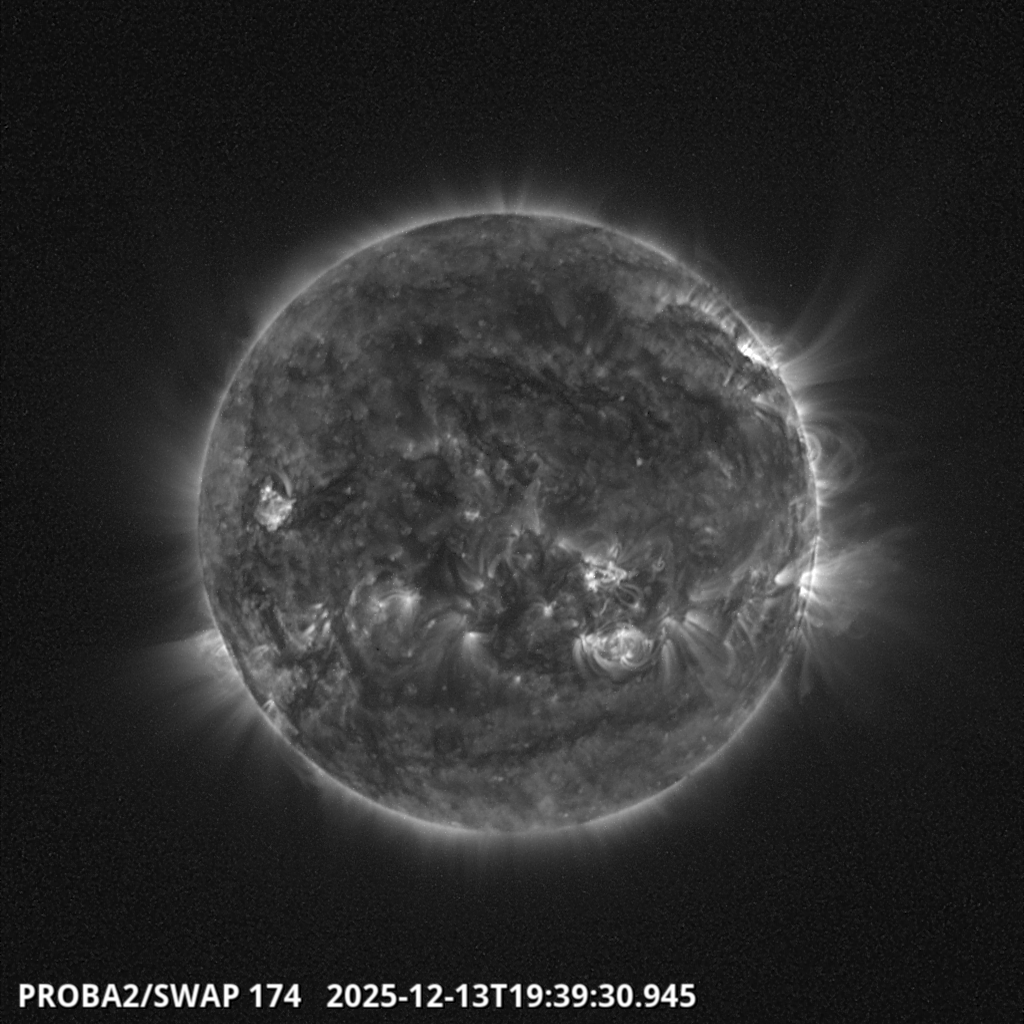
life in general: (part 2) japanquake11mar11: solar flares' impact on earth & a reason behind japan's massive quake


I have no doubt in my mind that today's massive earthquake in Japan and the quake that hit New Zealand a few days back were caused, in part, due to renewed flaring activity of our Sun in the last one month. To know what is a solar flare click here.

I get daily emails about solar flares and solar wind from Belgium-based Solar Influences Data Center. When there is something intense happening with regard to solar activity I get a separate alert from them by email.

I share below 4 alert emails I got from SIDC in the last 3 days (starting from the latest to the earliest). They are self-explanatory as to the intensity of the solar activity.

1)
From: Solar Influences Data analysis Center
Date: 11 March 2011 03:42
Subject: PRESTO ALERT
To: RegisteredUsers@sidc.be
:Issued: 2011 Mar 10 2210 UTC
:Product: documentation at http://www.sidc.be/products/presto
#--------------------------------------------------------------------#
# FAST WARNING 'PRESTO' MESSAGE  from the SIDC (RWC-Belgium)         #
#--------------------------------------------------------------------#
A second shock in the solar wind parameters was observed around 17h30
UT this evening. Kp reached a value of 4 during the past 3h-period.
Unsettled to active periods are possible in the coming hours.
#--------------------------------------------------------------------#
# Solar Influences Data analysis Center - RWC Belgium                #
# Royal Observatory of Belgium                                       #
# Fax : 32 (0) 2 373 0 224                                           #
# Tel.: 32 (0) 2 373 0 491                                           #
#                                                                    #
# For more information, see http://www.sidc.be.  Please do not reply #
 

2)
From: Solar Influences Data analysis Center
Date: 10 March 2011 14:46
Subject: PRESTO ALERT
To: RegisteredUsers@sidc.be


:Issued: 2011 Mar 10 0915 UTC
:Product: documentation at http://www.sidc.be/products/presto
#--------------------------------------------------------------------#
# FAST WARNING 'PRESTO' MESSAGE  from the SIDC (RWC-Belgium)         #
#--------------------------------------------------------------------#
A shock was observed in the solar wind speed as observed by the ACE
spacecraft around 6h10 UT this morning. This indicated the arrival of
the CME that left the Sun around 20h12 on March 7. As BZ is negative
with a value of -10, active conditions are expected in the coming hours.


3)
From: Solar Influences Data analysis Center
Date: 10 March 2011 12:18
Subject: PRESTO ALERT
To: RegisteredUsers@sidc.be


:Issued: 2011 Mar 10 0646 UTC
:Product: documentation at http://www.sidc.be/products/presto
#--------------------------------------------------------------------#
# FAST WARNING 'PRESTO' MESSAGE  from the SIDC (RWC-Belgium)         #
#--------------------------------------------------------------------#
An X1.5 flare occurred yesterday evening at 23h16 in NOAA AR 11166,
which is on the center of the solar disk. No coronographic data from
LASCO is available yet, but SDO/AIA images suggest a CME associated to
this event.
4)
From: Solar Influences Data analysis Center
Date: 8 March 2011 14:52
Subject: PRESTO ALERT
To: RegisteredUsers@sidc.be
:Issued: 2011 Mar 08 0920 UTC
:Product: documentation at http://www.sidc.be/products/presto
#--------------------------------------------------------------------#
# FAST WARNING 'PRESTO' MESSAGE  from the SIDC (RWC-Belgium)         #
#--------------------------------------------------------------------#
A proton event is ongoing. It originates from a long duration flare
M3.7 that occurred yesterday evening in NOAA AR 11164 around 20h01. The
CME associated with this event was seen in SOHO/LASCO and STEREO-B/COR2.
It is not directed straight towards Earth, but we can expect a glancing
blow to hit Earth around March 10th. With three beta-gamma-delta regions
on the solar disk at the moment, we can expect more flaring activity in
the coming hours.

life in general: (part 1) japanquake11mar11: prayer for japan - it has been hit by a devastating quake & tsunami

Some parts of Japan have been devastatingly hit by a large earthquake and 10-metre high tsunami waves.

I hold all Japanese in prayer and hope that the situation stabilises without further damage to life and property.

Some initial videos of the effects of the quake and tsunami can be seen here, here and here.