I have written several posts here on my blog on how in the name of development, the government, industrialists, companies, economists and consumers are violating human rights and environmental laws. I share below another instance of this taking place in India. It involves the largest freshwater lake in India.
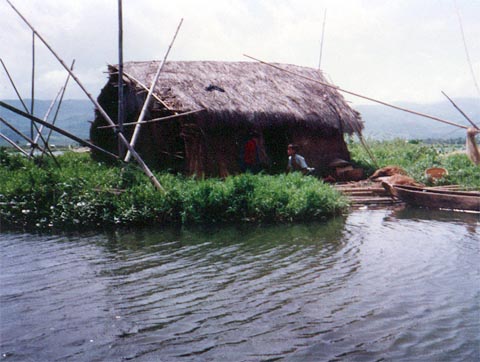
(the image given alongside is of Loktak lake in Manipur state of India & is courtesy http://www.manipur.org/photos/general/view.php?3)
http://www.scoop.co.nz/stories/WO1112/S00818/india-police-assault-protesting-women-at-loktak-lakke.htm
India: Police Assault Protesting Women at Loktak Lake
Friday, 30 December 2011, 1:47 pm
Press Release: Asian Human Rights Commission
28 December 2011
------------------------------------------------------
INDIA: Manipur police assault protesting women at Loktak Lake
ISSUES: Violence against women; torture and inhuman treatment; forced eviction; corruption; indigenous communities
-------------------------------------------------------
Dear friends,
The Asian Human Rights Commission (AHRC) has received information from the Citizens' Concern for Dams and Development, Manipur concerning a brutal police action upon women protesting against the forced eviction at Loktak Lake. The incident happened on 19 December. It is reported that about 10 women were injured in the incident when the police baton-charged the protesting women. The police also fired about 200 rounds to disperse the protesters, but have failed in doing so. The women are protesting against the state government's forced eviction of dwellers on the Loktak Lake who have been living on the floating vegetable mass on the lake for generations.
In an earlier Urgent Appeal (AHRC-UAC-237-2011) issued by the AHRC on 18 November 2011, we had reported that the state government is setting on fire huts in order to evict the dwellers from Loktak Lake. The women assaulted on 19 December are those who had lost everything to the government's eviction drive and had been protesting peacefully since then. Though the police officers came to the protest scene with full force armed with assault rifles, there was not a single woman police officer at the scene, contrary to the mandate in the Criminal Procedure Code, 1974 and in direct violation of the Supreme Court's directives concerning police action against women. The national media in India have been largely avoiding reportage of the event, which the people from Manipur rightly claim depicts the extent of discrimination practiced by the rest of the country, including by its media against the region.
CASE NARRATIVE:
The following is the narrative of the incident as provided by the Citizens' Concern for Dams and Development.
At least 10 women from the Meitei community in Manipur in India's North East campaigning against the controversial Manipur Loktak Lake Protection Act, 2006, were seriously injured in the brutality unleashed by the Manipur state police at Thanga Chingjin, Manipur on 19 December 2011. All the injured women were taking part in a protest rally, organised by the All Loktak Lake Fishermen's Union and the All Manipur Thanga People's Welfare Association demanding the repeal of the Manipur Loktak Lake Protection Act, 2006, under which the Loktak Development Authority and the Manipur police have unleashed widespread arson and destruction of floating huts over Phumdis, a floating vegetation mass, in Manipur since 15 November 2011 despite stiff opposition by the affected families.
The protest rally commenced from Thanga Chingyang Hill until the Manipur police stopped it at Thanga Chingjin in Bishenpur district. The Officer-in-Charge of Moirang Police Station, Mr. Dhananjoy was leading the police. The police in an attempt to disperse the protestors resorted to baton charge, physical assault and even firing of about 200 live rounds. The incident has caused shock and panic among the community members, who are already under shock from the burning of their houses. No women police officers were involved in the crackdown of the protest, which mostly comprised of women and elderly people. This is a clear violation of the Criminal Procedure Code 1974. The police physically assaulted the women in the incident.
The injured women were taken to Community Health Centre Moirang. One of them, Ms Oinam Akasini, wife of Oinam Tomba is in a serious condition and has been referred to the Regional Institute of Medical Sciences. The condition of Ms Khwairakpam Thambalmala and Ms Heisnam Ashangbi also is serious and they are advised to undergo further medical checkups.
During the protest rally at Thanga, the protesters demanded the repeal of the Loktak Lake Protection Act 2006 and demanded that the prohibition for fishing and building huts in Loktak Lake to be withdrawn by the state government. They were also protesting against the absence of free, prior and informed consent of the indigenous communities living in the Loktak wetlands in the management and protection measures taken concerning the Lake and against the restrictions imposed upon the communities over the use and dependence on lake. A vital aspect of this division is the ban on building huts or houses on phumdis inside the lake, planting athaphum, or engaging in athaphum-fishing in the core area.
The prohibition will adversely affect over 10,000 people living in phumdi huts, as well as others dependent on Loktak Lake. Sections 19 and 20 of the Act, divides the Lake into two zones - a core zone comprising 70.30 sq km, which is declared a 'no development zone', or 'totally protected zone', and a buffer zone of other areas of the lake excluding the core zone.
The police action targeting the indigenous women defending their right to life and survival means is a direct violation of their rights as human rights defenders. The incident also violates the Convention on the Elimination of all forms of Discrimination against Women and the Convention against Torture and Other Cruel, Inhuman or Degrading Treatment or Punishment. The failure to seek consent of the affected communities before the enactment or the eviction drive is a form of discrimination targeting marginalised communities. It also violates the United Nations Declaration on the Rights of Indigenous Peoples and the Convention on the Elimination of all Forms of Racial Discrimination. The arson and destruction of floating huts and livelihood of the indigenous people living in Loktak Lake constitute a serious violation of the "right to life", "right to adequate housing" as guaranteed by the Constitution of India and as provided in the International Covenant on Civil and Political Rights and the International Covenant on Economic, Social and Cultural Rights.
The burning of huts of the indigenous people depending on the Loktak Wetlands for survival violates the Ramsar Convention, in particular resolutions VII. 8 of Ramsar Convention's Conference of contracting parties held in May 1999 at Costa Rica and Resolution VIII. 19 held in Spain in November 2002. The two documents provide guidelines for establishing and strengthening local communities and indigenous people's participation and to consider the cultural values of wetlands in the management of wetlands. India is a contacting party to the convention since 1 February 1982.
Nearly the Loktak Development Authority and the Manipur police have already burnt 1147 floating huts since 15 November 2011. These floating huts were used by the indigenous Meitei people for fishing and also as a refuge for landless people who were earlier displaced by the Ithai Barrage of the Loktak Multipurpose Hydroelectric Project, which has inundated nearly 80,000 Hectares of prime agricultural land since its commissioning in 1984. The fishing gears and nets of the communities, the only survival means to catch fish from the Loktak wetlands were also burned which has left the community in further misery. For generations people have been living in floating huts in localities like Khuman Yangbi, Nambul Machin and Karang Sabal within the Loktak Lake. The affected family members including women, children and the elderly had been seeking refuge at Thanga Chingyang Community Hall in Bishenpur district, Manipur.
Each household was offered Rs. 40,000 as compensation by the government before their huts were burned. However, most of the villagers rejected this payment, as the amount is not adequate to compensate their livelihood and survival means. In addition, there is no process to rehabilitate the affected villagers and their right to free, prior and informed consent has not been sought so far. The worst of all is that in many cases, the police at gunpoint had been forcing the displaced families to set on fire their huts.
The government of Manipur, though its Loktak Development Authority has been blaming the indigenous peoples dwelling in Loktak lake for polluting and causing contamination of the Lake. However, the Ithai Barrage of the Loktak Multipurpose Hydroelectric Project, commissioned in 1984, has led to large-scale devastation of Loktak wetlands, its ecosystem, loss of indigenous plant and faunal species, disturbance of the wetlands natural balance and cleansing system leading to pollution and an alarming increase in siltation from the rivers.
Despite all these, the national and Manipur governments in their official publications and calendars, highlight the phumdi and the people living on floating huts, as a tourist attraction. During the current Sangai Tourism Festival (21-30 November 2011), the Loktak Lake and traditional floating fishing community has been also showcased. Experts attending the one day discussion on "Contradictions of Ramsar Conventions Standards and Guidelines with Loktak Wetlands Management in Manipur" organised by the All Loktak Lake Areas Fishermen's Union and All Manipur Thanga People's Welfare Association at the Conference Hall of Manipur State Central Library, Imphal on 17 December had recommended the repeal of the Manipur Loktak Lake Protection Act, 2006.
ADDITIONAL INFORMATION:
The Government of Manipur has long targeted the Loktak Lake for corruption and manipulations. A sample of the extent of money being spent in the name of preserving Loktak Lake is available here. Interestingly, the Project Director of the Loktak Development Authority, Mr. Ibobi Singh has issued the "Utilisation Certificate" for large sums of money, allegedly used for preserving the lake and its ecosystem.
The National Human Rights Commission has directed the Government of Manipur to institute an inquiry by the Central Bureau of Investigation into the corruption concerning the clearing of phumdi by a company named K Pro Infra Works Private Ltd. A report about the fictitious company and the millions those associated with the dredging project reported in an independent investigative magazine Tehelka is reproduced below:
The Lake And The Fake Firm
Why was a Rs 224-cr project to clean up Manipur's Loktak Lake given to a ghost outfit, asks Kunal Majumder.
The author can be contacted at kunal@tehelka.com
The original article published in Tehelka Magazine, Vol 7, Issue 13, Dated April 03, 2010, could be viewed at www.tehelka.com/story_main44.asp?filename=Ne030410the_lake.asp
At a grandiose function in Imphal on January 6 this year, Manipur Chief Minister Okram Ibobi Singh handed over the ceremonial keys of the Rs 224 crore-Loktak Lake clean-up project to representatives of a company that does not exist. On paper, K Pro Infra Works Private Ltd, which won the contract, has a Delhi address. But on the ground, Flat No A-104, Plot No 29 (New Friends Apartment), Sector 6, Dwarka, is a private residential property with no one currently living in it. Guards at Plot No 29 say a lot of people visit the flat, though it is not known who these itinerant visitors are. "They stay only for a few days," said one of the guards who asked not to be named. Significantly, while the address of K Pro Infra Works figures in the Ministry of Corporate Affairs website, information like the "company" website and its phone number is missing.
The clean-up project involves removing 132.94 lakh cubic metres of phumdis - the local name for the thick biomass that is filling up the largest fresh water lake in the Northeast, around 40 km from Imphal.
Deferring to an age-old ritual, the 62- year-old Ibobi Singh watched a K Pro Infra Works dredger scoop out the phumdis and load the waste onto a truck - after which he left. And the photo-ops over, so did the dredger, the trucks and the representatives of K Pro Infra Works. But considering it was registered only on June 22, 2009 and has a paid-up capital of just Rs 10 lakh, it must be asked how the "company" managed to buy dredgers costing Rs 40 lakh each. A press release of the Loktak Development Authority (LDA) claims that K Pro Works Private Limited (the word 'Infra' dropped) is a joint venture with Progressive Constructions Limited which posted a gross turnover of Rs 1019.91 during 2007-08. It isn't clear whether this is a typing error or the real figure, as neither the company nor LDA is willing to comment.
THE OTHER puzzle is that while Ibobi Singh cut the red ribbon on January 6, the on-paper process of cleaning up the lake had started nearly two years ago. This was the same period - spanning 2008-09 - when the Planning Commission made a Special Plan Assistance (SPA) of Rs 25 crore to Manipur for "conservation and management of Loktak Lake and associated wetlands". In the progress report submitted to the Planning Commission (a copy of which is in TEHELKA's possession) the Project Director of Loktak Development Authority (LDA), Thounaojam Ibobi Singh, claimed that Rs 16.5 crore was given to K Pro Infra Works Pvt Ltd as "mobilisation advance" for phumdi management.
But the lie is easily nailed. For again, how can a contract be given in financial year 2008-09 (that ends on March 31, 2009) to a company that was founded in June 2009? The final Utilisation Certificate issued by LDA shows that, in all, Rs 17.8 crore has so far been spent on phumdi, water and project management and administration; and the remaining Rs 7.2 crore on conservation and the management of Loktak Lake and associated wetlands.
On November 20, 2009, DS Poonia, Chief Secretary in the Manipur government, had sought an additional Rs 65 crore for the project from the Planning Commission under the Special Plan Assistance 2009-10. Sarvan Kumar, Director, Special Plan-North East at the Planning Commission, confirmed to TEHELKA that the amount requested had been sanctioned. Poonia's letter to SN Brohmo Choudhury, Adviser, Special Plan (North-East), Planning Commission, reveals that the Commission had sought detailed information on the project. Among other things, it had wanted to know the steps that had been taken to engage an accredited institution for third party monitoring. It was also suggested that the government too should closely monitor the project work and submit its reports to the Planning Commission.
The government's response was depressingly familiar. It merely set up two committees to "look into the matter".
Indeed, all the paper trails and local media reports point strongly at the possibility of a major scam brewing in Imphal. Coincidentally, even as this report was being filed, a senior Manipur Cabinet minister was in Delhi at the invitation of the Congress leadership to discuss with Rahul Gandhi the corruption charges against the CM, and how the list keeps getting fatter. Requesting anonymity, the minister said: "I did present evidences to various senior Union ministers and party leaders about the way the Chief Minister is minting money in the state." He even alleged that K Pro Infra Works was actually owned by a top politician's 'natural' son.
Repeated attempts to get a response from the Chief Minister failed. Diana Potsangbam, press officer of LDA, said the project director, Thounaojam Ibobi Singh, could not speak till he had the consent of the CM and directed this correspondent to check LDA's website www.loktak.org which is in Russian! (This website is not in operation anymore).
Now how does one interpret this?
Friday, 30 December 2011, 1:47 pm
Press Release: Asian Human Rights Commission
28 December 2011
------------------------------------------------------
INDIA: Manipur police assault protesting women at Loktak Lake
ISSUES: Violence against women; torture and inhuman treatment; forced eviction; corruption; indigenous communities
-------------------------------------------------------
Dear friends,
The Asian Human Rights Commission (AHRC) has received information from the Citizens' Concern for Dams and Development, Manipur concerning a brutal police action upon women protesting against the forced eviction at Loktak Lake. The incident happened on 19 December. It is reported that about 10 women were injured in the incident when the police baton-charged the protesting women. The police also fired about 200 rounds to disperse the protesters, but have failed in doing so. The women are protesting against the state government's forced eviction of dwellers on the Loktak Lake who have been living on the floating vegetable mass on the lake for generations.
In an earlier Urgent Appeal (AHRC-UAC-237-2011) issued by the AHRC on 18 November 2011, we had reported that the state government is setting on fire huts in order to evict the dwellers from Loktak Lake. The women assaulted on 19 December are those who had lost everything to the government's eviction drive and had been protesting peacefully since then. Though the police officers came to the protest scene with full force armed with assault rifles, there was not a single woman police officer at the scene, contrary to the mandate in the Criminal Procedure Code, 1974 and in direct violation of the Supreme Court's directives concerning police action against women. The national media in India have been largely avoiding reportage of the event, which the people from Manipur rightly claim depicts the extent of discrimination practiced by the rest of the country, including by its media against the region.
CASE NARRATIVE:
The following is the narrative of the incident as provided by the Citizens' Concern for Dams and Development.
At least 10 women from the Meitei community in Manipur in India's North East campaigning against the controversial Manipur Loktak Lake Protection Act, 2006, were seriously injured in the brutality unleashed by the Manipur state police at Thanga Chingjin, Manipur on 19 December 2011. All the injured women were taking part in a protest rally, organised by the All Loktak Lake Fishermen's Union and the All Manipur Thanga People's Welfare Association demanding the repeal of the Manipur Loktak Lake Protection Act, 2006, under which the Loktak Development Authority and the Manipur police have unleashed widespread arson and destruction of floating huts over Phumdis, a floating vegetation mass, in Manipur since 15 November 2011 despite stiff opposition by the affected families.
The protest rally commenced from Thanga Chingyang Hill until the Manipur police stopped it at Thanga Chingjin in Bishenpur district. The Officer-in-Charge of Moirang Police Station, Mr. Dhananjoy was leading the police. The police in an attempt to disperse the protestors resorted to baton charge, physical assault and even firing of about 200 live rounds. The incident has caused shock and panic among the community members, who are already under shock from the burning of their houses. No women police officers were involved in the crackdown of the protest, which mostly comprised of women and elderly people. This is a clear violation of the Criminal Procedure Code 1974. The police physically assaulted the women in the incident.
The injured women were taken to Community Health Centre Moirang. One of them, Ms Oinam Akasini, wife of Oinam Tomba is in a serious condition and has been referred to the Regional Institute of Medical Sciences. The condition of Ms Khwairakpam Thambalmala and Ms Heisnam Ashangbi also is serious and they are advised to undergo further medical checkups.
During the protest rally at Thanga, the protesters demanded the repeal of the Loktak Lake Protection Act 2006 and demanded that the prohibition for fishing and building huts in Loktak Lake to be withdrawn by the state government. They were also protesting against the absence of free, prior and informed consent of the indigenous communities living in the Loktak wetlands in the management and protection measures taken concerning the Lake and against the restrictions imposed upon the communities over the use and dependence on lake. A vital aspect of this division is the ban on building huts or houses on phumdis inside the lake, planting athaphum, or engaging in athaphum-fishing in the core area.
The prohibition will adversely affect over 10,000 people living in phumdi huts, as well as others dependent on Loktak Lake. Sections 19 and 20 of the Act, divides the Lake into two zones - a core zone comprising 70.30 sq km, which is declared a 'no development zone', or 'totally protected zone', and a buffer zone of other areas of the lake excluding the core zone.
The police action targeting the indigenous women defending their right to life and survival means is a direct violation of their rights as human rights defenders. The incident also violates the Convention on the Elimination of all forms of Discrimination against Women and the Convention against Torture and Other Cruel, Inhuman or Degrading Treatment or Punishment. The failure to seek consent of the affected communities before the enactment or the eviction drive is a form of discrimination targeting marginalised communities. It also violates the United Nations Declaration on the Rights of Indigenous Peoples and the Convention on the Elimination of all Forms of Racial Discrimination. The arson and destruction of floating huts and livelihood of the indigenous people living in Loktak Lake constitute a serious violation of the "right to life", "right to adequate housing" as guaranteed by the Constitution of India and as provided in the International Covenant on Civil and Political Rights and the International Covenant on Economic, Social and Cultural Rights.
The burning of huts of the indigenous people depending on the Loktak Wetlands for survival violates the Ramsar Convention, in particular resolutions VII. 8 of Ramsar Convention's Conference of contracting parties held in May 1999 at Costa Rica and Resolution VIII. 19 held in Spain in November 2002. The two documents provide guidelines for establishing and strengthening local communities and indigenous people's participation and to consider the cultural values of wetlands in the management of wetlands. India is a contacting party to the convention since 1 February 1982.
Nearly the Loktak Development Authority and the Manipur police have already burnt 1147 floating huts since 15 November 2011. These floating huts were used by the indigenous Meitei people for fishing and also as a refuge for landless people who were earlier displaced by the Ithai Barrage of the Loktak Multipurpose Hydroelectric Project, which has inundated nearly 80,000 Hectares of prime agricultural land since its commissioning in 1984. The fishing gears and nets of the communities, the only survival means to catch fish from the Loktak wetlands were also burned which has left the community in further misery. For generations people have been living in floating huts in localities like Khuman Yangbi, Nambul Machin and Karang Sabal within the Loktak Lake. The affected family members including women, children and the elderly had been seeking refuge at Thanga Chingyang Community Hall in Bishenpur district, Manipur.
Each household was offered Rs. 40,000 as compensation by the government before their huts were burned. However, most of the villagers rejected this payment, as the amount is not adequate to compensate their livelihood and survival means. In addition, there is no process to rehabilitate the affected villagers and their right to free, prior and informed consent has not been sought so far. The worst of all is that in many cases, the police at gunpoint had been forcing the displaced families to set on fire their huts.
The government of Manipur, though its Loktak Development Authority has been blaming the indigenous peoples dwelling in Loktak lake for polluting and causing contamination of the Lake. However, the Ithai Barrage of the Loktak Multipurpose Hydroelectric Project, commissioned in 1984, has led to large-scale devastation of Loktak wetlands, its ecosystem, loss of indigenous plant and faunal species, disturbance of the wetlands natural balance and cleansing system leading to pollution and an alarming increase in siltation from the rivers.
Despite all these, the national and Manipur governments in their official publications and calendars, highlight the phumdi and the people living on floating huts, as a tourist attraction. During the current Sangai Tourism Festival (21-30 November 2011), the Loktak Lake and traditional floating fishing community has been also showcased. Experts attending the one day discussion on "Contradictions of Ramsar Conventions Standards and Guidelines with Loktak Wetlands Management in Manipur" organised by the All Loktak Lake Areas Fishermen's Union and All Manipur Thanga People's Welfare Association at the Conference Hall of Manipur State Central Library, Imphal on 17 December had recommended the repeal of the Manipur Loktak Lake Protection Act, 2006.
ADDITIONAL INFORMATION:
The Government of Manipur has long targeted the Loktak Lake for corruption and manipulations. A sample of the extent of money being spent in the name of preserving Loktak Lake is available here. Interestingly, the Project Director of the Loktak Development Authority, Mr. Ibobi Singh has issued the "Utilisation Certificate" for large sums of money, allegedly used for preserving the lake and its ecosystem.
The National Human Rights Commission has directed the Government of Manipur to institute an inquiry by the Central Bureau of Investigation into the corruption concerning the clearing of phumdi by a company named K Pro Infra Works Private Ltd. A report about the fictitious company and the millions those associated with the dredging project reported in an independent investigative magazine Tehelka is reproduced below:
The Lake And The Fake Firm
Why was a Rs 224-cr project to clean up Manipur's Loktak Lake given to a ghost outfit, asks Kunal Majumder.
The author can be contacted at kunal@tehelka.com
The original article published in Tehelka Magazine, Vol 7, Issue 13, Dated April 03, 2010, could be viewed at www.tehelka.com/story_main44.asp?filename=Ne030410the_lake.asp
At a grandiose function in Imphal on January 6 this year, Manipur Chief Minister Okram Ibobi Singh handed over the ceremonial keys of the Rs 224 crore-Loktak Lake clean-up project to representatives of a company that does not exist. On paper, K Pro Infra Works Private Ltd, which won the contract, has a Delhi address. But on the ground, Flat No A-104, Plot No 29 (New Friends Apartment), Sector 6, Dwarka, is a private residential property with no one currently living in it. Guards at Plot No 29 say a lot of people visit the flat, though it is not known who these itinerant visitors are. "They stay only for a few days," said one of the guards who asked not to be named. Significantly, while the address of K Pro Infra Works figures in the Ministry of Corporate Affairs website, information like the "company" website and its phone number is missing.
The clean-up project involves removing 132.94 lakh cubic metres of phumdis - the local name for the thick biomass that is filling up the largest fresh water lake in the Northeast, around 40 km from Imphal.
Deferring to an age-old ritual, the 62- year-old Ibobi Singh watched a K Pro Infra Works dredger scoop out the phumdis and load the waste onto a truck - after which he left. And the photo-ops over, so did the dredger, the trucks and the representatives of K Pro Infra Works. But considering it was registered only on June 22, 2009 and has a paid-up capital of just Rs 10 lakh, it must be asked how the "company" managed to buy dredgers costing Rs 40 lakh each. A press release of the Loktak Development Authority (LDA) claims that K Pro Works Private Limited (the word 'Infra' dropped) is a joint venture with Progressive Constructions Limited which posted a gross turnover of Rs 1019.91 during 2007-08. It isn't clear whether this is a typing error or the real figure, as neither the company nor LDA is willing to comment.
THE OTHER puzzle is that while Ibobi Singh cut the red ribbon on January 6, the on-paper process of cleaning up the lake had started nearly two years ago. This was the same period - spanning 2008-09 - when the Planning Commission made a Special Plan Assistance (SPA) of Rs 25 crore to Manipur for "conservation and management of Loktak Lake and associated wetlands". In the progress report submitted to the Planning Commission (a copy of which is in TEHELKA's possession) the Project Director of Loktak Development Authority (LDA), Thounaojam Ibobi Singh, claimed that Rs 16.5 crore was given to K Pro Infra Works Pvt Ltd as "mobilisation advance" for phumdi management.
But the lie is easily nailed. For again, how can a contract be given in financial year 2008-09 (that ends on March 31, 2009) to a company that was founded in June 2009? The final Utilisation Certificate issued by LDA shows that, in all, Rs 17.8 crore has so far been spent on phumdi, water and project management and administration; and the remaining Rs 7.2 crore on conservation and the management of Loktak Lake and associated wetlands.
On November 20, 2009, DS Poonia, Chief Secretary in the Manipur government, had sought an additional Rs 65 crore for the project from the Planning Commission under the Special Plan Assistance 2009-10. Sarvan Kumar, Director, Special Plan-North East at the Planning Commission, confirmed to TEHELKA that the amount requested had been sanctioned. Poonia's letter to SN Brohmo Choudhury, Adviser, Special Plan (North-East), Planning Commission, reveals that the Commission had sought detailed information on the project. Among other things, it had wanted to know the steps that had been taken to engage an accredited institution for third party monitoring. It was also suggested that the government too should closely monitor the project work and submit its reports to the Planning Commission.
The government's response was depressingly familiar. It merely set up two committees to "look into the matter".
Indeed, all the paper trails and local media reports point strongly at the possibility of a major scam brewing in Imphal. Coincidentally, even as this report was being filed, a senior Manipur Cabinet minister was in Delhi at the invitation of the Congress leadership to discuss with Rahul Gandhi the corruption charges against the CM, and how the list keeps getting fatter. Requesting anonymity, the minister said: "I did present evidences to various senior Union ministers and party leaders about the way the Chief Minister is minting money in the state." He even alleged that K Pro Infra Works was actually owned by a top politician's 'natural' son.
Repeated attempts to get a response from the Chief Minister failed. Diana Potsangbam, press officer of LDA, said the project director, Thounaojam Ibobi Singh, could not speak till he had the consent of the CM and directed this correspondent to check LDA's website www.loktak.org which is in Russian! (This website is not in operation anymore).
Now how does one interpret this?

 The environment is holding up growth and economic development. This is the common refrain in circles that matter. So when the Group of Ministers tasked to resolve the issue of coal mining in forests asked for a report on what needs to be done, it was told that the best would be to dismantle green conditions, almost completely.

