March 11, 2011

life in general: (part 2) japanquake11mar11: solar flares' impact on earth & a reason behind japan's massive quake


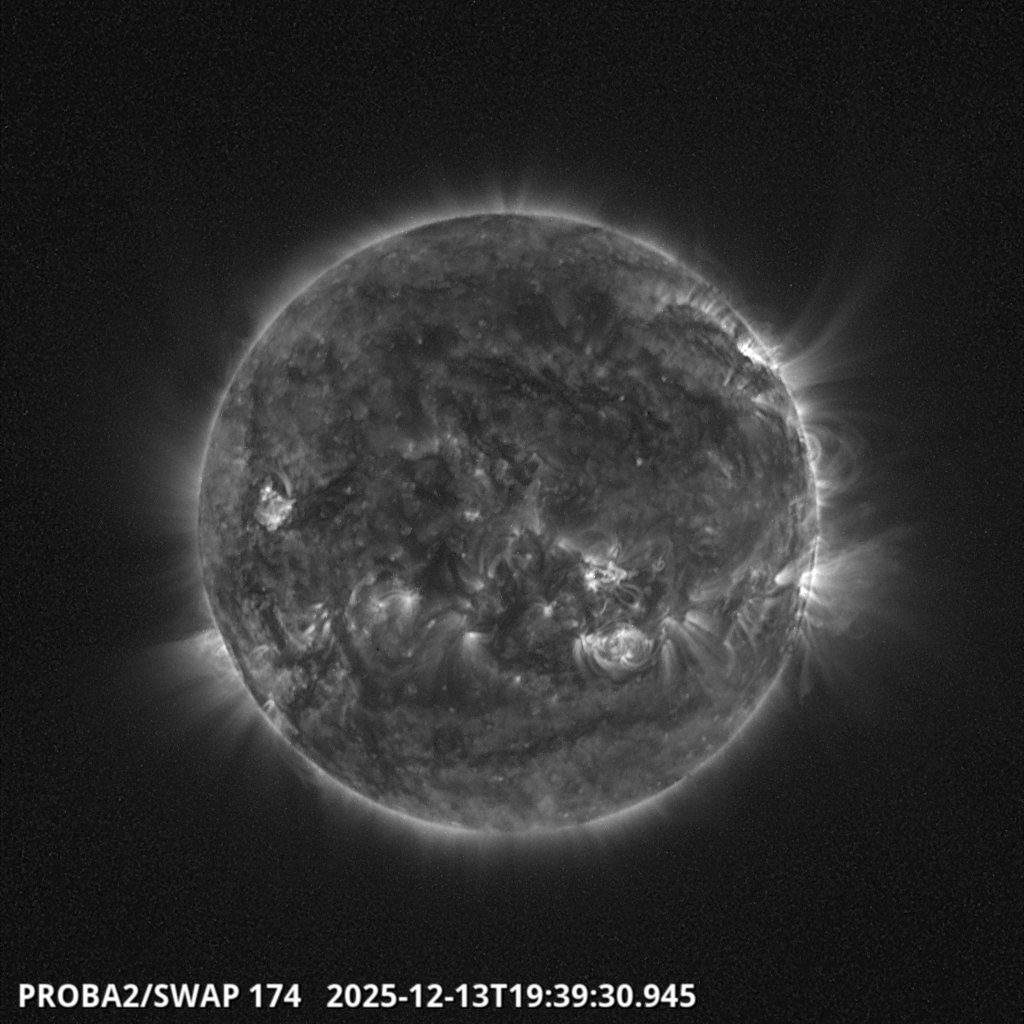
I have no doubt in my mind that today's massive earthquake in Japan and the quake that hit New Zealand a few days back were caused, in part, due to renewed flaring activity of our Sun in the last one month. To know what is a solar flare click here.

I get daily emails about solar flares and solar wind from Belgium-based Solar Influences Data Center. When there is something intense happening with regard to solar activity I get a separate alert from them by email.

I share below 4 alert emails I got from SIDC in the last 3 days (starting from the latest to the earliest). They are self-explanatory as to the intensity of the solar activity.

1)
From: Solar Influences Data analysis Center
Date: 11 March 2011 03:42
Subject: PRESTO ALERT
To: RegisteredUsers@sidc.be
:Issued: 2011 Mar 10 2210 UTC
:Product: documentation at http://www.sidc.be/products/presto
#--------------------------------------------------------------------#
# FAST WARNING 'PRESTO' MESSAGE  from the SIDC (RWC-Belgium)         #
#--------------------------------------------------------------------#
A second shock in the solar wind parameters was observed around 17h30
UT this evening. Kp reached a value of 4 during the past 3h-period.
Unsettled to active periods are possible in the coming hours.
#--------------------------------------------------------------------#
# Solar Influences Data analysis Center - RWC Belgium                #
# Royal Observatory of Belgium                                       #
# Fax : 32 (0) 2 373 0 224                                           #
# Tel.: 32 (0) 2 373 0 491                                           #
#                                                                    #
# For more information, see http://www.sidc.be.  Please do not reply #
 

2)
From: Solar Influences Data analysis Center
Date: 10 March 2011 14:46
Subject: PRESTO ALERT
To: RegisteredUsers@sidc.be


:Issued: 2011 Mar 10 0915 UTC
:Product: documentation at http://www.sidc.be/products/presto
#--------------------------------------------------------------------#
# FAST WARNING 'PRESTO' MESSAGE  from the SIDC (RWC-Belgium)         #
#--------------------------------------------------------------------#
A shock was observed in the solar wind speed as observed by the ACE
spacecraft around 6h10 UT this morning. This indicated the arrival of
the CME that left the Sun around 20h12 on March 7. As BZ is negative
with a value of -10, active conditions are expected in the coming hours.


3)
From: Solar Influences Data analysis Center
Date: 10 March 2011 12:18
Subject: PRESTO ALERT
To: RegisteredUsers@sidc.be


:Issued: 2011 Mar 10 0646 UTC
:Product: documentation at http://www.sidc.be/products/presto
#--------------------------------------------------------------------#
# FAST WARNING 'PRESTO' MESSAGE  from the SIDC (RWC-Belgium)         #
#--------------------------------------------------------------------#
An X1.5 flare occurred yesterday evening at 23h16 in NOAA AR 11166,
which is on the center of the solar disk. No coronographic data from
LASCO is available yet, but SDO/AIA images suggest a CME associated to
this event.
4)
From: Solar Influences Data analysis Center
Date: 8 March 2011 14:52
Subject: PRESTO ALERT
To: RegisteredUsers@sidc.be
:Issued: 2011 Mar 08 0920 UTC
:Product: documentation at http://www.sidc.be/products/presto
#--------------------------------------------------------------------#
# FAST WARNING 'PRESTO' MESSAGE  from the SIDC (RWC-Belgium)         #
#--------------------------------------------------------------------#
A proton event is ongoing. It originates from a long duration flare
M3.7 that occurred yesterday evening in NOAA AR 11164 around 20h01. The
CME associated with this event was seen in SOHO/LASCO and STEREO-B/COR2.
It is not directed straight towards Earth, but we can expect a glancing
blow to hit Earth around March 10th. With three beta-gamma-delta regions
on the solar disk at the moment, we can expect more flaring activity in
the coming hours.

life in general: (part 1) japanquake11mar11: prayer for japan - it has been hit by a devastating quake & tsunami

Some parts of Japan have been devastatingly hit by a large earthquake and 10-metre high tsunami waves.

I hold all Japanese in prayer and hope that the situation stabilises without further damage to life and property.

Some initial videos of the effects of the quake and tsunami can be seen here, here and here.

March 10, 2011

life in journalism: bbc journalists in libya experience detention & torture


Libya's dictator ruler, Muammar Gaddafi, is as brutal as dictators go. He has been using terro against the entire population of Libya to sustain his dictatorial rule. With the recent protests against his regime in Libya, he has intensified his terror tactics against anyone whom he thinks is not in his favour.

A few BBC journalists got a first-hand experience of the terror inflicted by Gaddafi and his men in Libya when they were arrested and beaten up a few days back.


Well, Gaddafi's days are numbered and I am sure the people of Libya will be freed from his rule soon.


Below are the details from BBC's website:


1)


BBC team's Libya ordeal in their own words

Three members of a BBC team covering the conflict in Libya have been detained and mistreated for 21 hours by the Libyan military.
Feras Killani, a Palestinian refugee with a Syrian passport; Goktay Koraltan, who is Turkish; and Chris Cobb-Smith, British, were stopped at a checkpoint at Al-Zahra south of Zawiya on Monday 7 March. Their local driver was also taken. Here, they describe what happened to them in their own words.
Feras: "They took everything, cameras, mobiles, asked for any memory cards and the bad thing was they asked 'whose gun is this in the car?'."
Did they show you a gun? Did the driver have one?
Feras: "No, there was no gun in the car."
Chris: "They weren't too bad to us."
The team was taken next to a barracks on the main highway, known locally as the kilometre 27 centre. They were interrogated by an officer who asked if they had permission to be out reporting.
Chris: "We had passed the barracks before, it had a distinctive black-and-white tank outside it."
Feras: "I think it was the main headquarters outside the city. It was a huge barracks."
Goktay: "We stayed in a room for a while. There was nice captain, he gave us Turkish coffee and cigarettes."
Feras: "They wanted to know how journalists worked, how Sky worked when they were in Zawiya. I told them in general how we work. He had some information but they wanted details.
"We were there about another 30 minutes and then a bad guy arrived. He had three stars on this shoulder, a captain."
Goktay: "He looked pissed off. He was a tall guy, aggressive as he came into the room."
End Quote Chris Cobb-Smith
Chris: "It was almost like good cop, bad cop. The good one left and then the other one stormed in."
Feras: "He asked a few questions in a very bad way, in Arabic. He was aggressive. I tried to explain we had only been in Zawiya a week before with the authorities.
"He said something bad about Palestinians, a lot of bad things, and he asked his team what they thought about Palestinians and they said the same things. He thought they had helped the Palestinians a lot, but Hamas has given a very bad reaction to Gaddafi. Lots of bad language.
"When I tried to respond he took me out to the car park behind the guard room. Then he started hitting me without saying anything. First with his fist, then boots, then knees. Then he found a plastic pipe on the ground and beat me with that. Then one of the soldiers gave him a long stick. I'm standing trying to protect myself, I'm trying to tell him we're working, I'm a Palestinian, I have a good impression of the country. He knew who we were [ie journalists] and what we were doing.
"I think there was something personal against me. They knew me and the sort of coverage I had been doing, especially from Tajoura the Friday before. I think they monitored the BBC and had an idea, not just the reports but also DTLs [interviews from the studio with a correspondent in the field]. They don't like us or Al-Arabiya or Al-Jazeera."
"He told me to return to the room and not to tell the other guys anything."
At this point Chris managed to get a call out - he hadn't been searched and had a phone - and called for help.
Chris: "We knew we were in trouble then. I said this is not good."
Feras: "The captain came in again after five minutes and asked if I spoke to the other guys. They had asked me if I was all right and I said OK. One of the guards said: 'Yes, he said one word.' So he took me out into the yard again."
"He asked the other guards to come and started to hit and kick me. I was speaking with him saying I only said yes and I explained we were nervous. At this point he sent me back to room after he cuffed me with plastic cuffs behind my back."
Goktay: "We were shocked when we saw him."
Chris: "Obviously the whole situation was deteriorating. In English he said to me: 'One question and you die.' He asked me if I had worked with National Geographic. Obviously they were doing their homework."
Feras was taken outside the room where they were being questioned and was beaten by a captain and others.
Feras: "They hit me with a stick, they used their army boots on me and their knees."
"It made it worse that I was a Palestinian… and they said you are all spies. Sometimes they said I was a journalist who was covering stories in a bad way.
"They put us in a car and the captain, the one who beat me, told the guard: 'If they say one word kill them'.
"He said to Chris: 'One question and you die.' He said if I say one word in English, he would kill me."
The car had a driver and a guard who kept his gun levelled on the three men throughout the journey.
Goktay: "He was pointing the gun at us, each of us in turn, an AK47."
They drove back towards Tripoli, past the Rixos Hotel where foreign media are based.
Goktay: "I felt horrible passing the hotel. The soldier had his finger on the trigger and I was worrying it would go off when we went over a bump."
Chris: "It made it even worse, an extra stab in your morale seeing the hotel appear and disappear but it was good because we knew exactly where we were."
It looked as if they were going to be driven into a military compound.
Chris: "I thought it was a good sign we were going to a legitimate barracks, it was a compound with an eagle on the gate, but we went straight past the front gate down a back street. The building was down the side, attached to the barracks and not behind the perimeter wall. It was a dirty, scruffy little compound about 100m (330ft) square. It was still light when we got there."
Goktay: "There was a big iron gate. It looked like a film set, like an execution place. They took us out of the car and in the middle of the compound there was a cage, they put three of us in the cage and the last thing I saw before the door shut, they hit Feras with an AK47. We started hearing him groaning. They turned up the radio, all Gaddafi songs."
Chris: "They were wearing uniforms with no badges of rank. Some of them had their faces covered."
Feras: "They were kicking and punching me, four or five men. I went down on to my knees. They attacked me as soon as I got out of the car. They knocked me down to the ground with their guns, AK47s. I was down on my knees and I heard them cocking their guns. I thought they were going to shoot me. It was a fake execution. Then they took me into the room."
It seemed to be something like a guard room. Plain concrete with a heavy door, looked like a cell though they wondered if the guards slept there.
Feras: "They took me inside and left me alone for a few minutes and then they started. It was three by four, with an iron door, like a cell. After 15 minutes they were hitting me and kicking me very hard, the worst since I arrived, they put cuffs on my legs. They put three layers over my face, something like a surgical hat, the thing a nurse would wear but over my face."
"I was on the floor on my side, hands and feet cuffed, lying half on a mattress, and they were beating me."
"Before they covered my face up, a big black guy, a very strong guy, pulled my head back by my hair and hit me on the face.
"They were saying I'm a spy working for British intelligence. They asked me about the $400 and £60 and some dinars I was carrying. They asked if I was given the money from the intelligence department I worked for.
"I can't remember how long it went for."
Goktay: "It was about half an hour. We could hear it… I think it was Feras, maybe it was another inmate. The driver was constantly praying. We could hear screams. I thought it was Feras."
At this point Chris was able to ring the BBC team in the Rixos Hotel again. In the call he said the Libyans were torturing Feras.
Chris: "I waited until I calculated the guard had walked off and chanced it. The driver was going spare, he knew that if we were caught with a phone at that stage, let alone actually using it, it would make things even worse, if that was possible."
Feras: "After they finished beating me they taped the mask on my head. Then another guy came in and I heard him ask the other guards: 'Why have you covered his face, he's a journalist, he can't breathe?' He told them to uncover my face. I was like that struggling to breathe for seven or eight minutes. I was in a very bad position. My face was on the floor. They pulled the mask back."
Goktay: "The black guy came into our cage and they put masks on us. Gaffer taped them on and handcuffed us. They took the driver out and then me. They said in Arabic 'go' - I thought they would shoot us from behind. I was saying in Turkish that I'm a friend. I thought they would shoot us, I could hear guns loading. I was scared to death I thought it was the execution moment."
Chris: "I could see out from the mask, I wasn't convinced we were going to be shot. I wasn't being pushed around as if they were about to shoot me. They helped me get out of the cage. It was a bit of a drop and they helped me down, it still wasn't pleasant. I could breathe. I think they did this [masked them] so we couldn't see the surroundings when they led us to the cell."
The driver was taken elsewhere. In the room/cell they rejoined Feras.
Goktay: "His face was pale, and twice the size. His hands covered in blood."
Feras: "A good guy had cut the cuffs off. They were so tight he cut me slightly. They put other cuffs on less tight."
Goktay: "He was lying on the floor, cuffed."
Chris: "We were hooded and cuffed and we saw Feras bent double, lying on the floor, face swollen, obviously in pain."
Goktay: "I was really scared, panicked. Chris was trying to say to me it was going to be OK. I thought they were going to kill us and blame al-Qaeda or the rebels."
Feras: "I was taken back out to the cage and the others were left in the room."
Chris: "It was probably the guardroom, where the guards usually rested. There was a metal door but it wasn't locked and bolted the whole time. We were there from about half eight or nine until three in the morning."
Chris and Goktay had no food, water or access to lavatories. Throughout the night they could hear the screams of people being tortured. Goktay said he saw women who had injuries, he presumed inflicted by their interrogators.
A young man from Zawiya was brought in to the room/cell where Chris and Goktay were held.
Chris: "He was terrified. He prayed all night. He peed himself. They threw the mattress out. He kept making throat slitting gestures as if he knew he would die, but he made it clear those gestures applied to us too. The guards kept coming in, screaming at him, terrorising him. They wouldn't let us stand up. If we did, they would scream at us too. The guards were also making throat slitting gestures to all of us.
"We were pretty much left alone but not allowed to stand up and stretch. They got angry if we tried. They didn't mind us talking.
"I sat on a filthy mattress with my back against the wall but facing the door so I could see anything that happened outside when it opened and through a crack when it was closed. I didn't sleep a wink, just watched the seconds tick by, trying to remain upbeat, trying to read something optimistic into every little incident.
"Gok and I shared the few cigarettes we had sparingly through the night, and then smoked the butts of the floor. It was cold but I didn't want to use the filthy blankets, or have them see me huddled and pathetic, though Gok told me later I sometimes was shaking."
Feras was in the yard in the metal cell, described as something like a prison van but without wheels. One guard believed Feras when he said he was a journalist, and cut off his plastic handcuffs. He spent the night doing what he could for the other prisoners, who were all handcuffed.
Some of them told him they had been arrested because their phone calls had been intercepted - including ones to the foreign media. At first there were four others already in the cage - two Egyptians who said they had lost their papers and two Libyans. Later they were joined by others.
Feras: "I spent the night in a cell. There were 10 to 12 men from Zawiya. Some were in a bad situation, with broken ribs."
Four of the other captives brought in after Feras were masked, with ankles and wrists cuffed. They were from Zawiya.
Feras: "The four from Zawiya tried not to tell me anything but later one of the guards told me they were fighters from Zawiya.
"All the guys were handcuffed and asking me to help them. There was water, one of them had two or three cigarettes so the good guard gave me a light. I helped them with water, helped them to pee.
"I was looking out of the cage. Cars were coming and going. I saw them bring in a guy and three girls, prisoners, too.
"Two of them told me they had broken ribs. The four who were masked. I helped them breathe by lifting their masks, saw they had been badly beaten.
"The four who were masked said they had been three days without food and with arms and legs cuffed. They said where they were now was like heaven compared to where they had been. They said they had been tortured for three days, and were from Zawiya. The four all knew each other. They didn't want to talk much. None of them said they were involved in fighting but the guard told me. Their hands were swollen and so were their faces.
"In the cage they were talking about what might happen next. They were speaking of their situation. Two of them asked me to burn their cuffs with a cigarette I refused. One of them said he had bad pains in his stomach, I called the guard who said: 'Shut up and let him die, don't ask again'."
The others were reunited with Feras and with their taxi driver when they were moved to another building at about 0300. They were crammed into a pick-up with a steel box on the back with other detainees.
Chris: "We were crammed in worse than sardines. The others were so badly beaten, and it was so full, that every time you moved someone screamed. They had mashed faces, broken ribs. We were handcuffed, really tightly, behind our backs."
Goktay: "We were put into a vehicle, a pick-up with an iron box on the back. Almost 20 of us."
Chris: "There was a jumble of arms and legs and bodies. They were beating one man who couldn't get in because it was too full, so we pushed up to make space for him. There was a community feeling in there. People were trying to help each other. Some people without handcuffs heaved me up to help me sit."
Feras: "Our driver told me we were driving towards the airport."
They were driven to a building that was much cleaner and seemed better organised. They believe it was the headquarters of the foreign intelligence service.
Chris: "It was smarter than the other places, better organised, less chaotic. It was good we hadn't been driven out of Tripoli into the countryside."
Feras: "I saw one of the guys who had arrested me at Tajoura last Friday. He said 'Feras, you again' and punched me on the side of my head."
Goktay: "There was a big operation going on. Lots of people. I could hear screams coming from the second floor. I could see people being taking to other parts of the building hooded and handcuffed."
Chris: "I could hear howls and yelps of pain [coming from the building]. There was a lot of coming and going."
Outside the building they were lined up facing the wall, and told to bend their heads and not look up. One of them screamed at Chris when he did look up. A man moved down the line with a small sub-machine gun equipped with a silencer.
Chris: "As you walk up the steps there was a big entrance and I was last in line. There were four of us including the driver. We were lined up against the wall facing it. I stepped aside to face a gap so they wouldn't be able to smash my face into the wall. A man with a small sub-machine gun was putting it to the nape of everyone's neck in turn. He pointed the barrel at each of us. When he got to me at the end of the line, he pulled the trigger twice. The shots went past my ear.
"They all laughed as though it was very funny. There was a whole group of them in plain clothes."
"After the shooting incident one man who spoke very good English, almost Oxford English, came to ask who we were, home towns and so on. Big fat chap. He was very pleasant, ordered them to cut off our handcuffs. When he had filled in the paper work, it was suddenly all over. They took us to their rest room. It was a charm offensive, packets of cigarettes, tea, coffee, offers of food."
Feras: "One man said to me 'sorry it was a mistake by the military'. But he said we were wrong first because we went out without permission."
The men sat there for another seven hours until they were returned to the Rixos Hotel and released.


2)
 
Gaddafi forces beat up BBC team 

Goktay Koraltan and Feras Killani said other detainees had been badly beaten
Continue reading the main story
Libyan leader Col Muammar Gaddafi's security forces detained and beat up a BBC news team who were trying to reach the strife-torn western city of Zawiya.
The three were beaten with fists, knees and rifles, hooded and subjected to mock executions by members of Libya's army and secret police.
The men were detained on Monday and held for 21 hours, but have now flown out of Libya.
Government forces are in a fierce fight to wrest Zawiya from rebel control.
Artillery and tanks have pounded the city - which lies 50km (30 miles) from the capital Tripoli - over the past four days.
The BBC said in a statement that it strongly condemned the "abusive treatment" of its journalists.
"The safety of our staff is our primary concern especially when they are working in such difficult circumstances and it is essential that journalists working for the BBC, or any media organisation, are allowed to report on the situation in Libya without fear of attack," said the statement from Liliane Landor, languages controller of BBC Global News.
"Despite these attacks, the BBC will continue to cover the evolving story in Libya for our audiences both inside and outside the country."
The BBC Arabic Service team showed their identification when they were detained at an army roadblock on Monday.
They had been seeking, like many journalists, to get around government restrictions by reaching besieged Zawiya.
The three of them were taken to a huge military barracks in Tripoli, where they were blindfolded, handcuffed and beaten.
One of the three, Chris Cobb-Smith, said: "We were lined up against the wall. I was the last in line - facing the wall.
"I looked and I saw a plain-clothes guy with a small sub-machine gun. He put it to everyone's neck. I saw him and he screamed at me.
"Then he walked up to me, put the gun to my neck and pulled the trigger twice. The bullets whisked past my ear. The soldiers just laughed."
A second member of the team - Feras Killani, a correspondent of Palestinian descent - appears to have been singled out for repeated beatings.
Their captors told him they did not like his reporting of the Libyan popular uprising and accused him of being a spy.
The third member of the team, cameraman Goktay Koraltan, said they were all convinced they were going to die.
During their detention, the BBC team saw evidence of torture against Libyan detainees, many of whom were from Zawiya.
Koraltan said: "I cannot describe how bad it was. Most of them [other detainees] were hooded and handcuffed really tightly, all with swollen hands and broken ribs. They were in agony. They were screaming."
Killani said: "Four of them [detainees] were in a very bad situation. There was evidence of torture on their faces and bodies. One of them said he had at least two broken ribs. I spent at least six hours helping them drink, sleep, urinate and move from one side to another."
A senior Libyan government official later apologised for the BBC team's ordeal.
Meanwhile, a meeting of Nato defence ministers on Thursday will discuss military options related to Libya including a proposed no-fly zone.
BBC Diplomatic Correspondent Jonathan Marcus says no decisions are likely to be taken, although contingency planning may well be intensified.
EU foreign ministers will also hold informal talks on Thursday ahead of a European Council summit on Friday that is expected to toughen sanctions against the Gaddafi regime.
Libyan government forces have been mounting a strong fightback against the rebels who rose up in mid-February to end Col Gaddafi's 41 years in power.
The main square of Zawiya reportedly changed hands twice on Wednesday in the fighting between pro-Gaddafi forces and the insurgents.
State TV reported that the army had retaken Zawiya, and showed pictures of what it said were residents staging a pro-Gaddafi rally.
Nato Secretary General Anders Fogh Rasmussen: We have decided to extend our surveillance
On the eastern front around the Mediterranean oil port of Ras Lanuf, rebels retreated in the face of heavy government shelling and ongoing air strikes, amid reports that oil facilities were blown up.
Col Gaddafi also launched a diplomatic offensive, dispatching envoys overseas on the eve of a summit by Nato defence ministers in Brussels.
High-ranking members of the Libyan leader's inner circle were sent to Cairo, Brussels, Lisbon and Malta to approach government officials.
The Libyan government meanwhile offered a reward for the capture of rebel leader Mustafa Abdel Jalil, the ex-justice minister. The amount was 500,000 Libyan dinars ($400,000; £250,000). 
February 22, 2011

life in general & financial markets: (part 3) india's obsession with diesel cars


I share below a latest statement from the Centre for Science and Environment on India's pathetic obsession with diesel cars.


Press Release

Finance Minister, it is time to take a decision to stop misuse of diesel subsidy by the rich diesel car owners. Any further delay will cost hugely to the nation and our health

New Delhi, February 18, 2011: India cannot afford to delay the decision to take away the current incentive for diesel cars given the public health and energy security implications -- the message that Centre for Science and Environment (CSE) has for Pranab Mukherjee, as he gets set to present this year’s Budget.

CSE has drawn the attention of the Finance Minister to the recent trends that show that the car industry is on an overdrive to introduce more new diesel car models even in the small car segments that had not seen much diesel penetration earlier. The combination of cheap diesel and lure of lesser taxes on small cars will make the diesel car numbers explode now. Already, diesel cars constitute 36 per cent of new car sales – this is expected to be half soon. Since 2008, the price gap has increased from 28 per cent to 35 per cent in Delhi. It is deplorable that cars are not being made to pay the full costs when the oil companies are losing Rs 7-9 per litre of diesel.

Says Anumita Roychoudhury, head of CSE’s air pollution team: “CSE condemns this perverse subsidy. If the use of subsidised diesel continues to increase, the government will continue to incur a huge revenue loss as it earns much less from excise on a litre of diesel used by cars, as opposed to petrol.” The Union government earns more than three times higher excise revenue from every litre of petrol used by a petrol car compared to a litre of diesel used by a diesel car. Revenue losses will compound with increased share of diesel cars and SUVs. Only in Delhi, this revenue loss amounts to close to Rs 300 crore. This can be mammoth on a nation-wide basis. “The government cannot justify this,” adds Roychoudhury.

The car industry is spawning the myth that fuel-efficient diesel cars will help save fuels and lower climate impacts. On the contrary, the market trend clearly shows that diesel is aiding a steady shift towards bigger cars that guzzle more fuel. While 85 per cent of the petrol cars sold in India have less than 1,200 cc engines, 64 per cent of diesel cars are just under 1,500 cc; the rest are all above. Despite fuel efficiency, bigger engines will always use more fuel and cheaper diesel fuel will encourage customers to opt for bigger and more powerful cars and thus undermine energy security. Higher petrol prices have effectively kept its market predominantly in small car segment.

CSE cautioned that cheaper diesel fuel will always encourage bigger cars, more driving and more fuel guzzling in the rebound. The ongoing India assessment of the International Council on Clean Transportation shows that these trends can lead to a cumulative loss of 6.5 mtoe (million tonne of oil equivalent) of energy between 2010 and 2020. This equals the fuel use of all four-wheeled passenger vehicles in 2006 -- around 6.6 mtoe. This defeats the objective of improving India’s energy security.

Auto industry’s claim of greater fuel efficiency and lesser carbon emissions from diesel cars is unacceptable as diesel fuel has higher carbon content than petrol. If more diesel is burnt encouraged by its cheaper prices, more heat-trapping CO2 will escape. Also, black carbon emissions from diesel vehicles are several times more heat-trapping than CO2 and this nullifies fuel efficiency gains.

The car industry is pitching for tax concession for bigger cars and to stop increase in taxes on diesel cars in this budget when ‘clean’ diesel (diesel with less than 15 ppm of sulphur) is not available in the country.

CSE researchers demand that “the excise on big cars and SUVs must remain at 24 per cent and the special excise duty on bigger cars, MUVs and SUVs must be fully restored and increased in the forthcoming budget. This is a critical energy security measure.”

It is ironic that tax differential is being officially justified in the name of agriculture and freight, but rich car owners benefit more. Cars have already become the second biggest user of diesel and beneficiaries of the official tax policy. Cars use up 15 per cent of the total diesel in the country – compared to 12 per cent by buses and agriculture, 10 per cent by industry, and 6 per cent by the railways.

CSE has drawn attention of the Finance Minister to the global practices in which other governments have taken fiscal measures to discourage diesel in cars. In Brazil, diesel cars are actively discouraged because of the policy to keep taxes lower on diesel. In Denmark, diesel cars are taxed higher to offset the lower prices of diesel fuel. In China, taxes do not differentiate between petrol and diesel. The European Commission has calculated the difference in lifetime pollution costs of Euro IV compliant diesel car and petrol car. The total pollution cost of a Euro IV diesel car is 1,195 Euros vis-a-vis 846 Euros for a petrol car. This nullifies the marginal greenhouse gas reduction benefit of diesel car and costs higher to the society.

The Finance Minister can not afford to ignore the economic and environmental consequences of diesel pricing. Several committees including Kirit Parikh Committee have already recommended additional excise duty to eliminate the incentives arising from the lower diesel taxes.

Tax measures are absolutely necessary to discourage diesel cars until the time India introduced clean diesel (diesel fuel with 10 ppm sulphur used along with advanced emissions control systems) nation-wide. Otherwise, health risk associated with conventional diesel emissions is very serious. Some of the deadliest air toxics, also carcinogens, are related to diesel emissions. These are even blamed for killing unborn foetuses. According to WHO and other international regulatory and scientific agencies diesel particulates are carcinogens.

What CSE demands
  • Additional, substantial and effective excide duty on diesel cars to prevent dieselization of car segment.
  • Align small diesel car definition with that of petrol. Currently small petrol car is legally defined as one with length not exceeding 4,000 mm and with an engine capacity not exceeding 1,200 cc. For diesel small car this has been relaxed to 1,500 cc for diesel cars. Make it same as small petrol car for the purpose of tax measures.
  • Fully restore 24 per cent excise and increase further the special duty on all big cars.
  • Taxes must also begin to reflect the actual fuel use in cars to prevent shift towards bigger cars that use more fuel and threaten energy security.

For more details, please contact Anumita Roychoudhury at anumita@cseindia.org. To set up interviews with CSE researchers and experts, write to Papia Samajdar at papia@cseindia.org, or speak to her at 99108 64339.

February 17, 2011

life in general & financial markets: smell the industrial pollution

I do not travel much. But whenever I have, and have done so by rail or road, and from one state to another, I have passed by certain areas where I have had the unpleasant experience of smelling nauseous gases emitting from industries. This is more acute when traveling past these areas in the night when there would be no vigilance by state authorities. In my limited travel experience I can point out two such notorious places -- Baroda in Gujarat and a place in Uttaranchal Pradesh that comes on the way from Delhi to Dehra Dun by train.

Industrial pollution is not quite felt by urban India as the factories that spew out deadly gases in the air or release toxic liquid and solid waste on the ground. But it is felt by the villagers and small-town folk who live in or around these remote areas. In these areas, industrial pollution is on a rampage in our country and I am sure in many other countries as well.

It is so because influential people such as politicians, bureaucrats, conscious and articulate elite, and media editors reside in urban areas and do not acutely experience the consequences. Each state in our country has a pollution control board and a vast majority of them have a miserable track record of bringing accountability to the polluters, large or small. We do have strong environment laws passed by the central government and various state governments but they are largely on paper.

Among the heavy industrial pollutants that cause the most damage, when allowed to emit without control, are ones spewed out by sponge iron industry (used to make steel), petrochemicals industry, pesticide-manufacturing companies, coal-based power plants, basic chemicals industry and oil refineries.

It is not that industries and companies, at least a few of them, are not using technology or processes to curtain the toxic emissions, but the rate of growth of production by industrial India is far more than the rate of use of pollution-control mechanisms.
Even though the environment regulators at the state and central level may be sleeping, I believe we, the urban people, can make a difference. All industrial production goes into making various products and articles that we, urbanites, consume. We can curtail such production by moderating our consumption. Every effort counts.

February 04, 2011

life in journalism: egyptian government's violence extends to local & foreign media

The ongoing attempt by the people of Egypt to free themselves from the nasty regime of Hosni Mubarak has involved many counter-attempts by the Egyptian government authorities to intimidate the people through violence and other means. 

Now, due to last week's  coverage of the massive people-led demonstrations, even journalists, local and foreign, are being physically attacked in Egypt.

Here is a newsreport that throws light on the happenings there:


Why are reporters being attacked?
By Ashley Fantz, CNN
February 4, 2011 -- Updated 0547 GMT (1347 HKT)

Attacks against journalists send a message.

"It clearly conveys that the government is not in favor of democratic reforms because journalists represent free speech, and free speech is crucial to democracy," said Kelly McBride, a media ethics teacher at the Poynter Institute, a U.S.-based professional journalism training center and think tank.

"The point of silencing a journalist is to pull the curtain over what's happening," she said. "The other reason is to create fear, to intimidate other reporters."

Journalists from Egypt, Great Britain, the United States, India, Australia, Greece and other countries have reported being jumped, beaten, detained and interrogated this week while reporting on the uprising against Egyptian President Hosni Mubarak.

At least one Swedish journalist was reportedly stabbed. One was marched back to her hotel at gunpoint. Many said their cameras and other equipment were smashed. A few are reportedly unaccounted for. First-hand accounts of the crackdown are lighting up Twitter. One of two correspondents from Canada's Globe and Mail newspaper tweeted a chilling timeline leading up to their apparent detainment.

In a one-day span, attacks on reporters included 30 detentions, 26 assaults and eight instances of equipment seized, and plainclothes and uniformed agents reportedly entered at least two hotels where international journalists were staying to confiscate media equipment, said the Committee to Protect Journalists, a New York-based organization, on Thursday.

"Mubarak forces have attacked the very breadth of global journalism: Their targets have included Egyptians and other Arab journalists, Russian and U.S. reporters, Europeans and South Americans," CPJ said in a news release.

The Egyptian government has publicly criticized the violence and denied involvement, but on Thursday, Vice President Omar Suleiman said international TV reporters are part of the problem.

"I actually blame certain friendly nations who have television channels, they're not friendly at all, who have intensified the youth against the nation and the state," Suleiman said in a TV address.

"They have filled in the minds of the youth with wrongdoings, with allegations and this is unacceptable. ... They should have never done that. They should have never sent this enemy spirit."

The attacks and harassment of journalists seem to be part of an organized effort, said State Department spokesman Philip J. Crowley. In a tweet early Thursday, he said: "There is a concerted campaign to intimidate international journalists in Cairo and interfere with their reporting. We condemn such actions."

State Department officials told CNN they have information that Egypt's Interior Ministry was behind the journalist detentions, citing reports from the U.S. Embassy in Egypt.

But in an interview with CNN, Crowley stopped short of naming the people behind the violence and harassment. "I can't tell you who is directing it but with the increasing number of instances of people roughing up journalist(s), cars attacked, offices broken into, journalists detained, these do not seem to be random events," he said.

Crowley suggested the attackers' endgame is intimidation, to make reporters afraid to file stories about an anticipated increase in anti-Mubarak protesters likely to take to the streets this weekend.

The violence toward journalists in Egypt seems more brazen and systematic than in any recent conflict, said Mohamed Abdel Dayem of the CPJ. Since 1981, it has tracked attacks and deaths of reporters targeted for doing their jobs. The only conflict in recent times that compares to the current situation, Dayem said, is the Algerian civil war in the 1990s.

The high number of attacks in Egypt might be, in part, because there were already a large number of reporters working in Cairo bureaus before the protests against Mubarak began, McBride said. News organizations, at least until recently, considered Cairo a convenient and friendly base from which to travel to more hostile areas in Africa and the Middle East.

Of course, that doesn't lessen outrage right now about the way reporters are being treated. But will it matter a week from now, a month from now? Will it affect the outcome of the movement to democratize Egypt?

"It's such a fast-moving story, it's impossible to know the answer now," said Barbara Cochran, a journalism professor at the University of Missouri School of Journalism. She was a vice president for news for National Public Radio and an executive producer of NBC's "Meet the Press."

She's covered several violent uprisings throughout her career, including China's Tiananmen Square protests in 1989.

"This is not like any other face-off between a regime that refuses to leave power and a people refusing to back down," she said.

"How it's covered, whether journalists will feel secure enough to cover it, will matter."

Newer technology -- the Web, Twitter, Facebook, smaller and cheaper recording devices such as Flip Cams -- has liberated reporting in many ways, Cochran said. But it also made journalists easier targets.

"When I was working, you could get into a country, do the reporting and get out without anyone sending a tweet out about your presence," she said. "And there wasn't a huge rush to report immediately, as there is now with news agencies competing to be the first to report online what's happening."

The story in Egypt is also unique because the Egyptian government managed to shut off access to the internet, blocking information that bloggers might have provided.

Consider that without Twitter or other social media tools, 2009's popular protests against Iranian President Mahmoud Ahmadinejad over contested election results would have been largely underreported, McBride and Cochran said.

Foreign journalists were blocked from entering the country. Ultimately, Ahmadinejad remained in power.

"I thought Iran would (be the country) in my mind that hit rock bottom (in how it treated reporters), but what Mubarak is doing is unspeakable," said Dayem.

In denying that the Egyptian government is behind the violence, Mubarak told ABC News on Thursday that the Muslim Brotherhood is to blame.

But there are other regions where sustained violence toward journalists has been raging for years, and little change has come of it. In Mexico, for instance, cartel violence continues despite the disappearance or death of more than 30 reporters since 2006, CPJ reported.

Egypt, perhaps, seems different to Western audiences, said McBride.

"Cairo resonates with us. It's an ally, tourism is big there. Most people considered it safe. I think part of why this story has captivated an audience is because they are saying, 'This is not the Egypt I thought I knew.' "

February 02, 2011

life in general & financial markets: (part 2) the farce that is india's environment ministry


There is an insightful story in the latest issue (dated 7 Feb '11) of weekly Outlook magazine on India's environment minister Jairam Ramesh's failure to deliver on the ground. I share it below.

Here goes (pics below are from Outlook's story itself):


Sandipan Chatterjee
It won’t rain forever Vedanta bauxite refinery plant in the Niyamgiri hills, Orissa


The Green Turns Grey
The environment minister promised much, but his flip-flops of late raise concern
Anuradha Raman

Mr Compromised
  • Vedanta In ’09, Jairam said no to mining. Now says yes to refinery expansion though water is scarce.
  • Polavaram dam Gives forest clearance, then seeks explanation
  • Posco Under litigation as the ministry says yes to forest clearance for iron ore/steel plant
  • Lavasa township Ministry report says ecologically sensitive Ghats will be affected. Later, Jairam lets off promoters with a fine.
  • National Green Tribunal Set up after dismantling the National Environment Tribunal. It allows any party (including violators) to appeal against decisions.
Union environment minister Jairam Ramesh is fast discovering that striking a balance between the environment, wildlife, coastal zones, forests and corporate lobbies can be quite a minefield. On one side, whispers abound on how the minister missed out on being elevated to cabinet rank because of his green-is-my-favourite-colour theme song while, on the other, environmentalists express disappointment that he has not lived up to all the promises made. While no one disputes that the minister has raised awareness (or that he is a huge improvement on his predecessors), a perception is gaining ground that the minister has not quite delivered.
Indeed, the U-turns done by the ministry under his stewardship has baffled many. Vedanta, Polavaram, the Lavasa township and the coastal regulatory laws are some of the big issues on which Jairam not only appears to have backtracked but also compromised. And we are not even talking of the smaller projects that have not got much media attention. Somewhere down the line, the minister appears to have lost the goodwill of the very people whose causes he wants to champion. He says (see interview) he’s got his share of brickbats and bouquets. But such admissions alone will not help. Says Himanshu Thakkar of South Asia Network on Dams, Rivers and People (SANDRP), “One expected transparent, participatory, environment-friendly policies and practices from someone who claims he believes in these values. When you do not see that, one is disappointed.”
Himanshu adds here that Jairam is more accessible and responsive than his predecessor, A. Raja, and initial action taken on projects like Posco, Vedanta, Adarsh apartments, the Navi Mumbai airport, the Lavasa project and  Maheshwar, among others, are welcome in parts. But there have also been many reversals, which some activists describe as the result of “a forked-tongue approach”. There are many who argue the minister should have initiated systemic actions. “Systems on compliance, transparency, better EIAS (environment impact assessments), greater participation by the affected people, nailing the fraudulent officers in charge of projects are some of the things he should have done. The minister hasn’t, raising doubts on whose side he is batting for.”
The environmentalists say inaction has led to a lot of confusion on the approval of big projects. For example, Jairam’s public utterings showing his willingness to allow the Vedanta refinery to expand after saying no to mining has muddied matters. “Where is the water for the refinery going to come from? Vedanta has already exhausted the streams nearby,” says Shankar Balakrishnan of Campaign for Survival and Dignity. Adds Himanshu, “While the minister earned praise for saying no to mining, he is sending confusing signals by agreeing to the expansion of the refinery.”
Similarly on Posco, Shankar argues that the ministry has not taken into account the views of the local people. “The Forest Rights Act needs to be complied with. But how come the environment ministry keeps giving approvals and then puts conditions? It’s confusing,” he says. Posco’s iron-ore mine, steel plant and private port (India’s largest foreign investment of Rs 52,000 crore) was granted forest clearance in 2009 and then a condition was added that it was subject to clearance of the Forest Rights Act (FRA)! Later, under pressure, a committee was appointed by the ministry to look at the FRA clearance under the stewardship of an official, in whose tenure an environment clearance was given to the project way back in ’05.
In Andhra Pradesh, there’s the controversial Polavaram dam which threatens to displace close to two lakh people, another example of how Jairam’s ministry approves and then disapproves. His ministry gave a forest clearance on July 28, 2010, without looking into the rights of the people. Prior to Jairam taking over, an environment clearance had already been sought for the project in ’05. While Jairam wrote in October 2010 to the Andhra CM enquiring whether the concerns of the local community had been factored in, little has come of it so far.
The Polavaram project threatens to displace mostly people from the marginalised adivasi communities. The project requires approximately 3,700 hectares of forest land as well as the sanction of the majority of these communities (who are entitled under the Forest Rights Act). The ministry granted the final forest clearance for the project in December ’09, stating that the approval is based on the assurance of the Andhra government that there are no rights to be settled under the Forest Rights Act in the project area. This, when the ministry’s own circular requires that the gram sabhas—not the state government—have to certify to the proper implementation of the law and have to grant their consent.
The ministry’s conditional clearance to the Lavasa township, said to have the backing of Congress ally, the NCP, is also intriguing. As per the environment ministry report, the Rs 3,000-crore hill town near Pune threatens to impact the Western Ghats. But now the builders have been let off with just a rap on the knuckles—in this case just a penalty.
Levelled off Aerial view of the Lavasa cityscape, in the core of the Western Ghats. (Photograph by Apoorva Salkade)
Adding to the list of damp squibs is Jairam’s inability to put transparent systems in place. Right from when he took over, environment groups had advised that conflict of interest rules be spelt out clearly, especially when it came to appointments on the Environment Assessment Committee on river valley and hydroelectric projects. The committee’s objective is to evaluate the environmental and social impacts of large dams and also look at no-dam options, and decide if the impact of the proposals are acceptable or not and if the project is viable.
The ministry has done little to appoint people with the right credentials. The current chairperson is a man who has served on the National Committee of the International Commission on Large Dams (INCOLD), a rabidly pro-large dam organisation which essentially works as a lobbying mechanism!
Meanwhile, what is really troubling environmentalists is the undue haste the ministry is showing in approving projects. Says Ritwick Datta, a lawyer who sought information under the RTI Act, “The minister’s own response was that as many as 535 projects of the total 769 projects have been approved and six were rejected! The period for which information was sought was from August 1, 2009, till July 31, 2010.”
On his part, Jairam says he is no enviro-caliph. But it’s time he becomes one, say environment experts.

February 01, 2011

life in general: 'live from the egyptian revolution'

(pic immediately below taken from http://news.bbcimg.co.uk/media/images/51049000/jpg/_51049700_tahrir2_384.jpg)

For too long, over 30 years, Egypt's president Hosni Mubarak has been a dictator ruler of the country. 
 
And he has been shamelessly supported by US and European countries.  

The uprising that is currently shaping up in Egypt is a very positive thing and an indication that governments that manipulate and terrorise its people, openly or cunningly, can not do it indefinitely.

Here is a passionate newsreport by an Egyptian:


Live From the Egyptian Revolution

by Sharif Abdel Kouddous
CAIRO, Egypt -- I grew up in Egypt. I spent half my life here. But Saturday, when my plane from JFK airport touched down in Cairo, I arrived in a different country than the one I had known all my life. This is not Hosni Mubarak's Egypt anymore and, regardless of what happens, it will never be again.
In Tahrir Square, thousands of Egyptians-men and women, young and old, rich and poor-gathered today to celebrate their victory over the regime's hated police and state security forces and to call on Mubarak to step down and leave once and for all. They talked about the massive protest on Friday, the culmination of three days of demonstrations that began on January 25th to mark National Police Day. It was an act of popular revolt the likes of which many Egyptians never thought they would see during Mubarak's reign. "The regime has been convincing us very well that we cannot do it, but Tunisians gave us an idea and it took us only three days and we did it," said Ahmad El Esseily, a 35 year-old author and TV/radio talk show host who took park in the demonstrations. "We are a lot of people and we are strong."
In Cairo, tens of thousands of people--from all walks of life--faced off against riot police armed with shields, batons, and seemingly endless supplies of tear gas. People talked about Friday's protest like a war; a war they'd won. "Despite the tear gas and the beatings, we just kept coming, wave after wave of us," one protester said. "When some of us would tire, others would head in. We gave each other courage." After several hours, the police were forced into a full retreat. Then, as the army was sent in, they disappeared.
The military was greeted warmly on the streets of Cairo. Crowds roared with approval as one soldier was carried through Tahrir square today holding a flower in his hand. Dozens of people clambered onto tanks as they rode around the square. Throughout the day people chanted: "The people, the army: one hand."
While the police and state security forces are notorious in Egypt for torture, corruption and brutality, the army has not interacted with the civilian population for more than 30 years and is only proudly remembered for having delivered a victory in the 1973 war with Israel. A 4pm curfew set for today was casually ignored with people convinced the army would not harm them. The police were a different story. Their brutality the past few days--decades in fact--has been well documented.
Saturday, some of the police forces were holed up inside their headquarters in the Interior Ministry building near the end of a street connected to Tahrir Square. When protesters neared the building, the police began firing live ammunition at the crowd, forcing them to flee back to the square. Three bloodied people were carried out. "The police are killing us," one man yelled desperately while on the phone with al Jazeera from outside the building. When the firing stopped, defiant protesters began approaching the building again. In the background, the smoking, blackened shell of Hosni Mubarak's National Democratic Party headquarters served as an ominous reminder of their intentions.
At this point it seems clear the people are not leaving the streets. They own them now and they are refusing to go until Mubarak does. They chanted, "Mubarak, the plane is waiting for you at the airport," and "Wake up Mubarak, today is your last day."
At one point, a rumor spread through Tahrir Square that Mubarak had fled the country. A massive cheer rippled through the crowd. People began jumping up and down in joy. One man wept uncontrollably. When it turned out not to be true, the cheers quickly ended but it provided a brief glimpse of the sheer raw desire for Mubarak's ouster. Reports now indicate that Mubarak's two sons and his wife, Suzanne, have fled Egypt, as have some of his closest business cronies. Many people believe that is a sign that Hosni will not be far behind.
There is a great sense of pride that this is a leaderless movement organized by the people. A genuine popular revolt. It was not organized by opposition movements, though they have now joined the protesters in Tahrir. The Muslim Brotherhood was out in full force today. At one point they began chanting "Allah Akbar" only to be drowned out by much louder chants of "Muslim, Christian, we are all Egyptian."
As the sun set over Cairo, silence fell upon Tahrir square as thousands stopped to pray in the street while others stood atop tanks. After the sunset prayer, they held a 'ganaza'-a prayer for those killed in the demonstrations. Darkness fell and the protesters, thousands of them, have vowed to stay in the square, sleeping out in the open, until Mubarak is ousted.
Meanwhile, across Cairo there is not a policeman in sight and there are reports of looting and violence. People worry that Mubarak is intentionally trying to create chaos to somehow convince people that he is needed. The strategy is failing. Residents have taken matters into their own hands, helping to direct traffic and forming armed neighborhood watches, complete with checkpoints and shift changes, in districts across the city.
Sharif Abdel KouddousThis is the Egypt I arrived in today. Fearless and determined. It cannot go back to what it was. It will never be the same.
Sharif Abdel Kouddous is a senior producer for the radio/TV show Democracy Now.
Follow him on Twitter at @sharifkouddous.